Standaard Boekhandel gebruikt cookies en gelijkaardige technologieën om de website goed te laten werken en je een betere surfervaring te bezorgen.
Hieronder kan je kiezen welke cookies je wilt inschakelen:
Technische en functionele cookies
Deze cookies zijn essentieel om de website goed te laten functioneren, en laten je toe om bijvoorbeeld in te loggen. Je kan deze cookies niet uitschakelen.
Analytische cookies
Deze cookies verzamelen anonieme informatie over het gebruik van onze website. Op die manier kunnen we de website beter afstemmen op de behoeften van de gebruikers.
Marketingcookies
Deze cookies delen je gedrag op onze website met externe partijen, zodat je op externe platformen relevantere advertenties van Standaard Boekhandel te zien krijgt.
Je cadeautjes zeker op tijd in huis hebben voor de feestdagen? Kom langs in onze winkels en vind het perfecte geschenk!
Afhalen na 1 uur in een winkel met voorraad
Gratis thuislevering in België vanaf € 30
Ruim aanbod met 7 miljoen producten
Je cadeautjes zeker op tijd in huis hebben voor de feestdagen? Kom langs in onze winkels en vind het perfecte geschenk!
Je kan maximaal 250 producten tegelijk aan je winkelmandje toevoegen. Verwijdere enkele producten uit je winkelmandje, of splits je bestelling op in meerdere bestellingen.
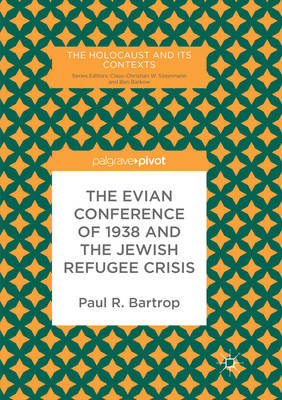
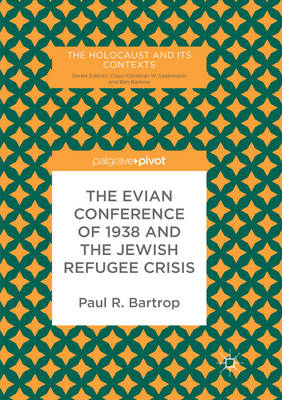
This book provides the first dedicated study of the Evian Conference of July 1938, an international initiative called by U.S. President Franklin D. Roosevelt. While on the surface the conference appeared as an attempt to alleviate the distress faced by Jews being forced out of Germany and Austria, in reality it only served to demonstrate that the nations of the world were not willing to accept Jews as refugees. Since the Holocaust, a generally-held assumption has been that the Evian Conference represented a lost opportunity to save Germany's Jews, and that the conference failed to rescue the Jews of Europe. In this study, Paul Bartrop argues that in fact it did not fail when measured against the original reasons for which it was called. Exposing many of the myths surrounding the meeting, this work addresses a glaring lacuna in the literature of the Holocaust, and places the so-called 'failure' of the Evian Conference into its proper context.