


- Afhalen na 1 uur in een winkel met voorraad
- Gratis thuislevering in België vanaf € 30
- Ruim aanbod met 7 miljoen producten
- Afhalen na 1 uur in een winkel met voorraad
- Gratis thuislevering in België vanaf € 30
- Ruim aanbod met 7 miljoen producten





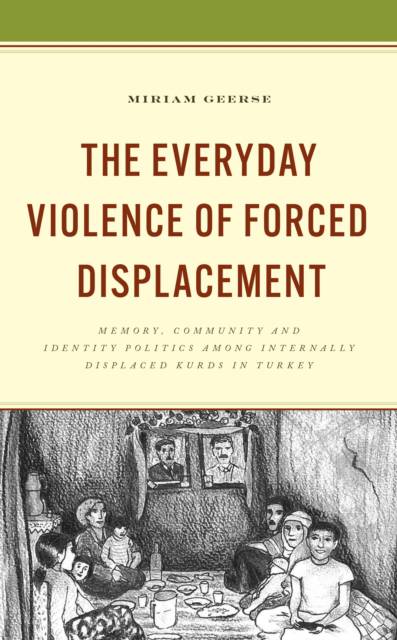
The Everyday Violence of Forced Displacement
Memory, Community and Identity Politics Among Internally Displaced Kurds in Turkey
Miriam Geerse
€ 220,45
+ 440 punten
Eenvoudig bestellen
Veilig betalen


Gratis thuislevering vanaf € 30 (via bpost)
Gratis levering in je Standaard Boekhandel
Omschrijving
The Everyday Violence of Forced Displacement: Memory, Community and Identity Politics among Internally Displaced Kurds in Turkey is based on ethnographic research in four Istanbul neighborhoods in the early 2000s and after. Miriam Geerse focuses on individuals and families that tried to sustain meaningful lives in an urban context marked by political and structural violence. Geerse argues that forces, other than war and forced displacement, instilled in many forced migrants a pressing need and desire to keep hammering home the price and pain of displacement. Much of this book then bears witness to the formation of an oppositionalconsciousness. Geerse's analysis of the mobilization of social capital in times of illness and social conflict offers an understanding of how a dispersed community of people who share the same stories function in an inhospitable urban environment. In laying bare the interconnections between experiences before, during and after forced displacement, and by focusing on people's narratives and their experiences, Geerse provides insight to activists striving to improve the position of Kurds, to academics studying the impact of forced migration and other forms of political violence on civilians, and to all those who argue for a more balanced view of the recent history of Turkey.
Specificaties
Betrokkenen
- Auteur(s):
- Uitgeverij:
Inhoud
- Aantal bladzijden:
- 384
- Taal:
- Engels
- Reeks:
Eigenschappen
- Productcode (EAN):
- 9781666902594
- Verschijningsdatum:
- 16/10/2023
- Uitvoering:
- Hardcover
- Formaat:
- Genaaid
- Afmetingen:
- 152 mm x 229 mm
- Gewicht:
- 734 g



Alleen bij Standaard Boekhandel
+ 440 punten op je klantenkaart van Standaard Boekhandel
CADEAU

AANGERADEN


Beoordelingen
We publiceren alleen reviews die voldoen aan de voorwaarden voor reviews. Bekijk onze voorwaarden voor reviews.