


- Afhalen na 1 uur in een winkel met voorraad
- Gratis thuislevering in België vanaf € 30
- Ruim aanbod met 7 miljoen producten
- Afhalen na 1 uur in een winkel met voorraad
- Gratis thuislevering in België vanaf € 30
- Ruim aanbod met 7 miljoen producten





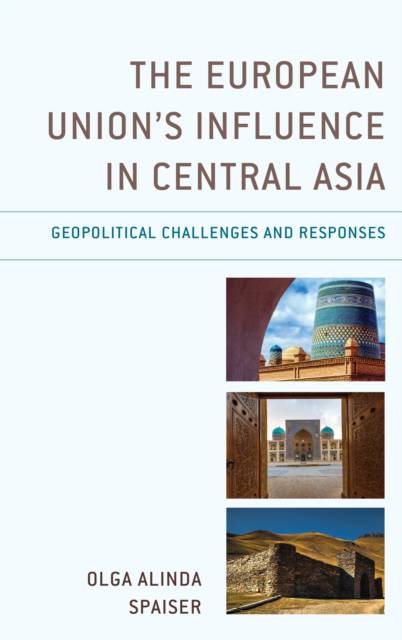
The European Union's Influence in Central Asia
Geopolitical Challenges and Responses
Olga Alinda Spaiser
€ 220,45
+ 440 punten
Omschrijving
Unknown yet highly strategic, Central Asia attracts the interest of major global powers due to its vast energy resources and crucial geographic position. Russia, China, and the European Union view this region as an indispensable springboard to enhance their political and economic influence on the Eurasian landmass. Thus, facing strong competition and working on low budget, the EU is attempting to establish itself as a relevant and influential actor in an environment in which its leadership role is far from certain. Unlike in other post-communist regions, the EU is not able to rely on the attractiveness of its political models, and risks being marginalized by other global powers. The crucial question then is: How does the EU exert influence in such a challenging geopolitical context? Which strategies does the EU apply to be an actor who counts? Through an analysis of the EU's discourse, instruments, and the reception of its policies in Central Asia, this study argues that the EU consciously takes the position of a second-tier actor who acts as a "consultant" and projects a picture of itself as an honest broker with no geopolitical agenda. The EU's influence is confined to niche domains in the security sphere that are nevertheless important for the regional security. The EU is not a great power in the region nor is it willing to become one. It does, however, have comparative advantages in being perceived as inoffensive and for occupying areas that are neglected by the other actors, such as governance and water security.
Specificaties
Betrokkenen
- Auteur(s):
- Uitgeverij:
Inhoud
- Aantal bladzijden:
- 270
- Taal:
- Engels
- Reeks:
Eigenschappen
- Productcode (EAN):
- 9781498542234
- Verschijningsdatum:
- 12/03/2018
- Uitvoering:
- Hardcover
- Formaat:
- Genaaid
- Afmetingen:
- 152 mm x 229 mm
- Gewicht:
- 566 g


Alleen bij Standaard Boekhandel
+ 440 punten op je klantenkaart van Standaard Boekhandel
Cadeau

AANGERADEN


Beoordelingen
We publiceren alleen reviews die voldoen aan de voorwaarden voor reviews. Bekijk onze voorwaarden voor reviews.