


- Afhalen na 1 uur in een winkel met voorraad
- Gratis thuislevering in België vanaf € 30
- Ruim aanbod met 7 miljoen producten
- Afhalen na 1 uur in een winkel met voorraad
- Gratis thuislevering in België vanaf € 30
- Ruim aanbod met 7 miljoen producten





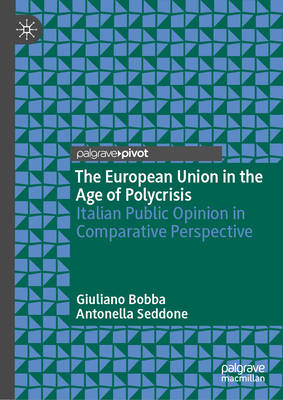
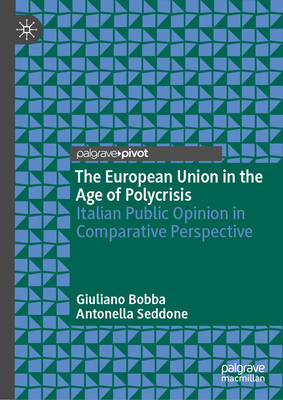
The European Union in the Age of Polycrisis
Italian Public Opinion in Comparative Perspective
Giuliano Bobba, Antonella Seddone
Hardcover | Engels
€ 43,45
+ 86 punten
Omschrijving
This book explores how public opinion toward the European Union has evolved during the age of polycrises. It shows that not all crises are perceived in the same way, nor do they generate uniform political responses. By distinguishing between process-oriented threats, event-driven crises, and recurrent threat-to-crisis issues, the book offers an original framework to analyse the impact of global challenges. Situating Italy within a comparative framework alongside France, Germany, Poland, Spain, and Sweden, the volume reveals how specific types of crises foster greater support, while others exacerbate disaffection or ambivalence. Despite signs of rising Euroscepticism in many European countries in recent years, the book argues that recent global threats and crises have helped to redefine the role of the EU in its relationship with national governments, leading to a shift in public opinion that mitigates criticism against it. The book will appeal to all those interested in European politics, political communication, and European studies.
Specificaties
Betrokkenen
- Auteur(s):
- Uitgeverij:
Inhoud
- Aantal bladzijden:
- 167
- Taal:
- Engels
Eigenschappen
- Productcode (EAN):
- 9783032036278
- Verschijningsdatum:
- 27/10/2025
- Uitvoering:
- Hardcover
- Formaat:
- Genaaid
- Afmetingen:
- 158 mm x 213 mm
- Gewicht:
- 358 g


Alleen bij Standaard Boekhandel
+ 86 punten op je klantenkaart van Standaard Boekhandel
Cadeau

AANGERADEN


Beoordelingen
We publiceren alleen reviews die voldoen aan de voorwaarden voor reviews. Bekijk onze voorwaarden voor reviews.