


- Afhalen na 1 uur in een winkel met voorraad
- Gratis thuislevering in België vanaf € 30
- Ruim aanbod met 7 miljoen producten
- Afhalen na 1 uur in een winkel met voorraad
- Gratis thuislevering in België vanaf € 30
- Ruim aanbod met 7 miljoen producten




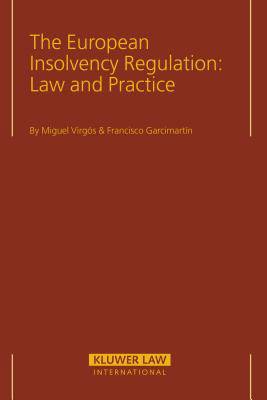
The European Insolvency Regulation
Law and Practice
Miguel Virgos, Francisco Garcimartin
Hardcover | Engels
€ 149,14
Omschrijving
After many years of negotiations among Member States, a uniform set of private international law rules has been established to determine the conduct of cross-border insolvency proceedings within the European Community. This is the European Insolvency Regulation of May 2000. Although each state still retains its own insolvency law, the regulation greatly reduces the risk of opportunistic behaviour by providing certainty as to which European courts have jurisdiction to open insolvency proceedings and which state¿s laws apply, in addition to ensuring the cross-border effectiveness within the EU of the decisions handed down by those courts. This in-depth commentary offers practitioners in international business transactions and litigation a definitive guide to the workings of the Insolvency Regulation. The authors¿one of whom co-wrote the official explanatory report on the 1995 Convention on Insolvency Proceedings, a report that still plays a fundamental hermeneutic role¿leave no stone unturned in their probing analysis, which explains in detail such elements as the following: relationship with other community legal instruments and international conventions;territorial scope;substantive scope;third-party rights in rem and reservation of title; set-off;contracts relating to immovable property;employment contracts and relationships;payment systems and financial markets; community patents and trademarks;publication and registration;lodgement of claims; andspecial considerations affecting credit institutions and insurance undertakings. Company lawyers handling insolvency cases and issues will find nothing comparable to this expert work. Its direct practical usefulness is immediately apparent. In addition, however, it stands out as a preeminent work on a critical and hard-won legal instrument (and by extension on the entire field of European insolvency law) and as such is an essential resource for jurists and legal academics.
Specificaties
Betrokkenen
- Auteur(s):
- Uitgeverij:
Inhoud
- Aantal bladzijden:
- 256
- Taal:
- Engels
Eigenschappen
- Productcode (EAN):
- 9789041120892
- Verschijningsdatum:
- 1/08/2004
- Uitvoering:
- Hardcover
- Formaat:
- Genaaid
- Afmetingen:
- 166 mm x 246 mm
- Gewicht:
- 576 g


Alleen bij Standaard Boekhandel
Cadeau

AANGERADEN


Beoordelingen
We publiceren alleen reviews die voldoen aan de voorwaarden voor reviews. Bekijk onze voorwaarden voor reviews.