


- Afhalen na 1 uur in een winkel met voorraad
- Gratis thuislevering in België vanaf € 30
- Ruim aanbod met 7 miljoen producten
- Afhalen na 1 uur in een winkel met voorraad
- Gratis thuislevering in België vanaf € 30
- Ruim aanbod met 7 miljoen producten





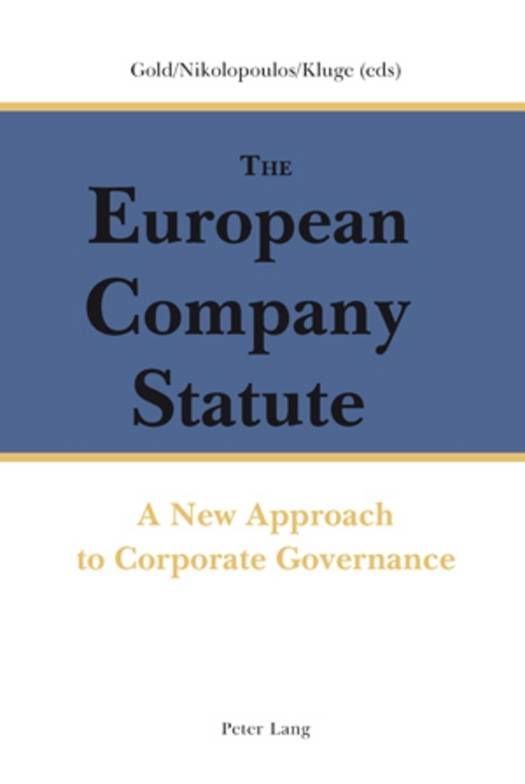
The European Company Statute; A New Approach to Corporate Governance
A New Approach to Corporate Governance
Lang Peter
Paperback | Engels
€ 103,45
+ 206 punten
Omschrijving
The European Company Statute (ECS) is one of the most important pieces of company legislation adopted so far by the European Union. Its aim is to regulate, on a voluntary basis, the internal functions of a business operating in more than two European countries at the same time. However, its implementation by companies requires the negotiation of agreements between employers and employees principally on the choice between a one-tier or two-tier system of board structure. While the ECS thereby promotes flexible solutions tailor-made to company requirements, it has failed to achieve full harmonisation of EU company law.
This book provides a comprehensive analysis of the history, structure, legal basis and likely impact of the ECS, examining its evolution over some 30 years of development and its chances for integrating diverse models of corporate governance across the European Economic Area. The book explores the implications of the ECS for employee participation at various levels in the European company, with country case studies drawn from Greece, Slovenia and the UK. It also analyses certain legal issues, including taxation and the position of companies located in countries without existing systems of employee board-level participation.
This book provides a comprehensive analysis of the history, structure, legal basis and likely impact of the ECS, examining its evolution over some 30 years of development and its chances for integrating diverse models of corporate governance across the European Economic Area. The book explores the implications of the ECS for employee participation at various levels in the European company, with country case studies drawn from Greece, Slovenia and the UK. It also analyses certain legal issues, including taxation and the position of companies located in countries without existing systems of employee board-level participation.
Specificaties
Betrokkenen
- Auteur(s):
- Uitgeverij:
Inhoud
- Aantal bladzijden:
- 374
- Taal:
- Engels
Eigenschappen
- Productcode (EAN):
- 9783039115600
- Verschijningsdatum:
- 2/12/2008
- Uitvoering:
- Paperback
- Formaat:
- Trade paperback (VS)
- Afmetingen:
- 152 mm x 229 mm
- Gewicht:
- 498 g



Alleen bij Standaard Boekhandel
+ 206 punten op je klantenkaart van Standaard Boekhandel
Cadeau

AANGERADEN


Beoordelingen
We publiceren alleen reviews die voldoen aan de voorwaarden voor reviews. Bekijk onze voorwaarden voor reviews.