


- Afhalen na 1 uur in een winkel met voorraad
- Gratis thuislevering in België vanaf € 30
- Ruim aanbod met 7 miljoen producten
- Afhalen na 1 uur in een winkel met voorraad
- Gratis thuislevering in België vanaf € 30
- Ruim aanbod met 7 miljoen producten





€ 67,95
+ 135 punten
Omschrijving
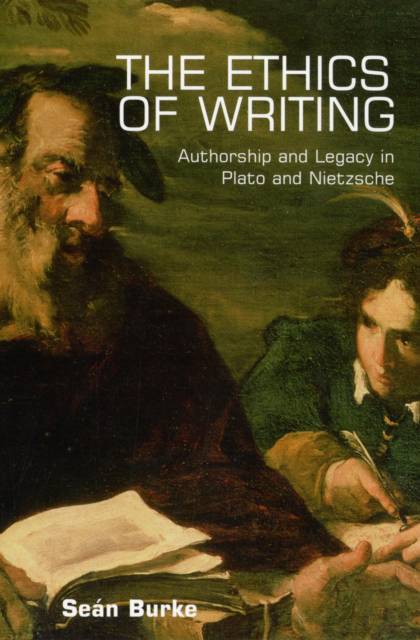
Beginning amidst the tombs of the 'dead' God, and the crematoria at Auschwitz, this book, newly available in paperback, confronts the Nietzschean legacy through a Platonic focus. Plato argues in the Phaedrus that writing is dangerous because it can neither select its audience nor call upon its author to the rescue. Yet, he transgresses this ethical imperative in the Republic which has proved defenceless against use and abuse in the ideological foundation of totalitarian regimes. Burke goes on to analyse the dangerous games which Plato and Nietzsche played with posterity. At issue is how authors may protect against 'deviant readings' and assess 'the risk of writing'. Burke recommends an ethic of 'discursive containment'.The ethical question is the question of our times. Within critical theory, it has focused on the act of reading. This study reverses the terms of inquiry to analyse the ethical composition of the act of writing. What responsibility does an author bear for his legacy? Do 'catastrophic' misreadings of authors (e.g. Plato, Nietzsche) testify to authorial recklessness? These and other questions are the starting-point for a theory of authorial ethics which will be further developed in a forthcoming book on the interanimating thought of Emmanuel Levinas and Jacques Derrida.Continuing the mission of the 'returned author' begun in his pioneering book The Death and Return of the Author, Burke recommends the 'law of genre' as a contract drawn up between author and reader to establish ethical responsibility. Criticism, under this contract, becomes an ethical realm and realm of the ethical.Key Features*An original, provocative and arresting construction of a new debate: the responsibility of authors for the effects of their works*Courageous discussion of catastrophic readings which played a part in the establishment of totalitarian regimes such as Nazism, Fascism, and Communism *An extension of the author's pioneering work on authorship into its ethic
Specificaties
Betrokkenen
- Auteur(s):
- Uitgeverij:
Inhoud
- Aantal bladzijden:
- 256
- Taal:
- Engels
Eigenschappen
- Productcode (EAN):
- 9780748641796
- Verschijningsdatum:
- 15/09/2010
- Uitvoering:
- Paperback
- Formaat:
- Trade paperback (VS)
- Afmetingen:
- 155 mm x 231 mm
- Gewicht:
- 399 g


Alleen bij Standaard Boekhandel
+ 135 punten op je klantenkaart van Standaard Boekhandel
Cadeau

AANGERADEN


Beoordelingen
We publiceren alleen reviews die voldoen aan de voorwaarden voor reviews. Bekijk onze voorwaarden voor reviews.