


- Afhalen na 1 uur in een winkel met voorraad
- Gratis thuislevering in België vanaf € 30
- Ruim aanbod met 7 miljoen producten
- Afhalen na 1 uur in een winkel met voorraad
- Gratis thuislevering in België vanaf € 30
- Ruim aanbod met 7 miljoen producten





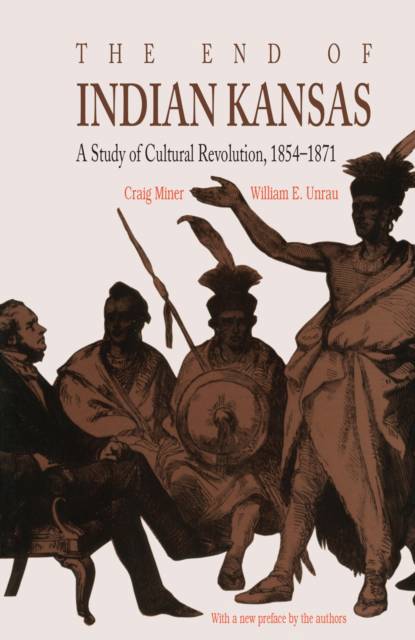
The End of Indian Kansas
A Study of Cultural Revolution, 1854-1871
H Craig Miner, Craig Miner
Paperback | Engels
€ 30,95
+ 61 punten
Omschrijving
When Kansas became a U.S. territory in 1854 literally all of its land area was guaranteed by treaty to Indians. More than 10,000 Kickapoos, Delawares, Sacs, Foxes, Shawnees, Potawatomis, Kansa, Ottawas, Wyandots, and Osages, not to mention a number of smaller tribes, inhabited Kansas. By 1875 there were only a couple of bands left. The forced removal of thousands of Indians from eastern Kansas between 1854 and 1871 affected more Indians and occupied more government time than the celebrated exploits of the military against the more warlike western tribes. In this volume Miner and Unrau show Kansas at midcentury to be a moral testing ground where the drama of Indian disinheritance was played out. They relate how railroad men, land speculators, and timber operations came to be firmly entrenched on Indian land in territorial Kansas. They examine remarkable incongruities in Indian policy, land policy, law, and administration, pointing to specific cases in which legal maneuvers by the federal government--within the framework of treaties, statutes, and executive pronouncements--helped to insure the pattern of tribal destruction. Separate chapters deal with internal factionalism in the Indian tribes, the practice of government chief-making, and the "Indian Ring"--the sub rosa alliances influencing the treaty or sale process. The authors also include revealing portraits of the individuals, from territorial governors to railroad officials, who helped engineer the end of Indian Kansas.
Specificaties
Betrokkenen
- Auteur(s):
- Uitgeverij:
Inhoud
- Aantal bladzijden:
- 196
- Taal:
- Engels
Eigenschappen
- Productcode (EAN):
- 9780700604746
- Verschijningsdatum:
- 27/12/1977
- Uitvoering:
- Paperback
- Formaat:
- Trade paperback (VS)
- Afmetingen:
- 141 mm x 217 mm
- Gewicht:
- 244 g



Alleen bij Standaard Boekhandel
+ 61 punten op je klantenkaart van Standaard Boekhandel
Cadeau

AANGERADEN


Beoordelingen
We publiceren alleen reviews die voldoen aan de voorwaarden voor reviews. Bekijk onze voorwaarden voor reviews.