



Bedankt voor het vertrouwen het afgelopen jaar! Om jou te bedanken bieden we GRATIS verzending (in België) aan op alles gedurende de hele maand januari.
- Afhalen na 1 uur in een winkel met voorraad
- In januari gratis thuislevering in België
- Ruim aanbod met 7 miljoen producten
Bedankt voor het vertrouwen het afgelopen jaar! Om jou te bedanken bieden we GRATIS verzending (in België) aan op alles gedurende de hele maand januari.
- Afhalen na 1 uur in een winkel met voorraad
- In januari gratis thuislevering in België
- Ruim aanbod met 7 miljoen producten





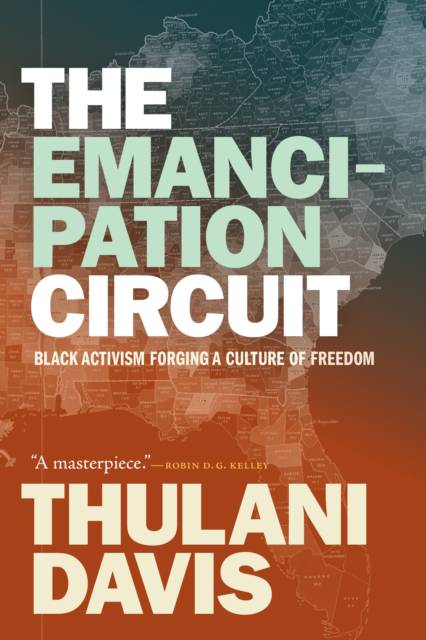
The Emancipation Circuit
Black Activism Forging a Culture of Freedom
Thulani Davis
Paperback | Engels
€ 41,95
+ 83 punten
Uitvoering
Omschrijving
In The Emancipation Circuit Thulani Davis provides a sweeping rethinking of Reconstruction by tracing how the four million people newly freed from bondage created political organizations and connections that mobilized communities across the South. Drawing on the practices of community they developed while enslaved, freedpeople built new settlements and created a network of circuits through which they imagined, enacted, and defended freedom. This interdisciplinary history shows that these circuits linked rural and urban organizations, labor struggles, and political culture with news, strategies, education, and mutual aid. Mapping the emancipation circuits, Davis shows the geography of ideas of freedom---circulating on shipping routes, via army maneuvers, and with itinerant activists---that became the basis for the first mass Black political movement for equal citizenship in the United States. In this work, she reconfigures understandings of the evolution of southern Black political agendas while outlining the origins of the enduring Black freedom struggle from the Jim Crow era to the present.
Specificaties
Betrokkenen
- Auteur(s):
- Uitgeverij:
Inhoud
- Aantal bladzijden:
- 464
- Taal:
- Engels
Eigenschappen
- Productcode (EAN):
- 9781478018193
- Verschijningsdatum:
- 30/06/2022
- Uitvoering:
- Paperback
- Formaat:
- Trade paperback (VS)
- Afmetingen:
- 152 mm x 229 mm
- Gewicht:
- 680 g



Alleen bij Standaard Boekhandel
+ 83 punten op je klantenkaart van Standaard Boekhandel
SOLDEN


Beoordelingen
We publiceren alleen reviews die voldoen aan de voorwaarden voor reviews. Bekijk onze voorwaarden voor reviews.