


- Afhalen na 1 uur in een winkel met voorraad
- Gratis thuislevering in België vanaf € 30
- Ruim aanbod met 7 miljoen producten
- Afhalen na 1 uur in een winkel met voorraad
- Gratis thuislevering in België vanaf € 30
- Ruim aanbod met 7 miljoen producten





€ 67,45
+ 134 punten
Eenvoudig bestellen
Veilig betalen


Gratis thuislevering vanaf € 30 (via bpost)
Gratis levering in je Standaard Boekhandel
Omschrijving
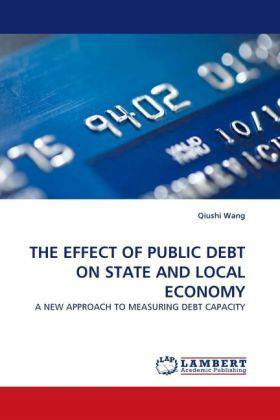
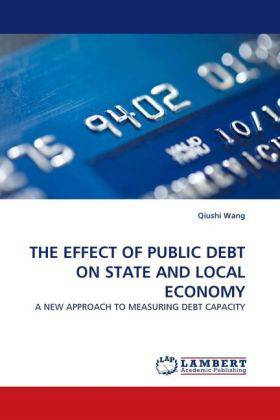
This book develops a theoretical framework to explain the relationship between public borrowing and economic growth and concentrates on four economic variables: public debt level, borrowing cost, public investment in infrastructure and economic growth. A simultaneous model is built and analyzed using different estimation methods so as to capture the relationship between the main dependent variables of interest, while controlling for the dynamics between other endogenous variables. The results show that public borrowing impacts state and local economic growth in a quadratic manner. When the borrowing level is within certain limit, it will improve economic growth primarily due to its contribution to the improvement of infrastructure; when the borrowing exceeds that limit, borrowing more money from the financial market will instead hurt regional economic growth due to its negative effects such as over-investing in infrastructure, undue debt service burden, among others. Based on this quadratic pattern, an optimal level of borrowing can then be calculated for making informative debt policies.
Specificaties
Betrokkenen
- Auteur(s):
- Uitgeverij:
Inhoud
- Aantal bladzijden:
- 184
- Taal:
- Engels
Eigenschappen
- Productcode (EAN):
- 9783838357843
- Verschijningsdatum:
- 3/06/2010
- Uitvoering:
- Paperback
- Afmetingen:
- 150 mm x 220 mm
- Gewicht:
- 244 g


Alleen bij Standaard Boekhandel
+ 134 punten op je klantenkaart van Standaard Boekhandel
CADEAU

AANGERADEN


Beoordelingen
We publiceren alleen reviews die voldoen aan de voorwaarden voor reviews. Bekijk onze voorwaarden voor reviews.