


- Afhalen na 1 uur in een winkel met voorraad
- Gratis thuislevering in België vanaf € 30
- Ruim aanbod met 7 miljoen producten
- Afhalen na 1 uur in een winkel met voorraad
- Gratis thuislevering in België vanaf € 30
- Ruim aanbod met 7 miljoen producten




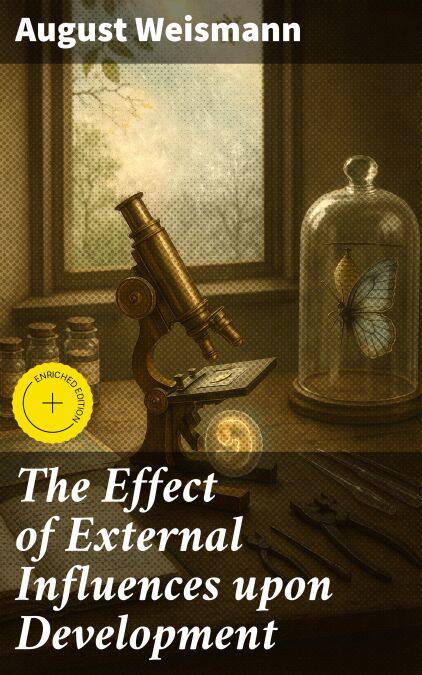
The Effect of External Influences upon Development E-BOOK
Enriched edition. Unraveling the Biology of Evolution and Development through External Influences
August Weismann
E-book | Engels
€ 1,99
+ 1 punten
Omschrijving
In "The Effect of External Influences upon Development," August Weismann presents a groundbreaking exploration of the interplay between environmental factors and biological evolution. Written in a rigorous yet accessible style, Weismann intricately examines how external stimuli shape the developmental pathways of organisms, offering insights that challenge the then-conventional Lamarckian views of inheritance. This work is seminal in its synthetic approach, bridging the fields of biology, genetics, and philosophy while laying the groundwork for the modern understanding of evolution and adaptation in changing environments. August Weismann (1834-1914) was a pioneering biologist whose extensive research on germ plasm theory fundamentally altered the discourse on genetics and heredity. His commitment to empirical observation and experimentation led him to question the impact of acquired characteristics on the germ line, ultimately crafting arguments that emphasized the significance of heredity as a factor in evolutionary processes. Weismann's intimate knowledge of natural history and passionate commitment to scientific rigor underscore the innovative spirit behind his work. Readers interested in evolutionary biology, genetics, or the philosophy of science will find Weismann's study both enlightening and provocative. It is a vital text for understanding the nuanced relationship between organisms and their environments, making it essential for anyone seriously engaged in the history and future of biological sciences.
In this enriched edition, we have carefully created added value for your reading experience:
- A succinct Introduction situates the work's timeless appeal and themes.
- The Synopsis outlines the central plot, highlighting key developments without spoiling critical twists.
- A detailed Historical Context immerses you in the era's events and influences that shaped the writing.
- A thorough Analysis dissects symbols, motifs, and character arcs to unearth underlying meanings.
- Reflection questions prompt you to engage personally with the work's messages, connecting them to modern life.
- Hand‐picked Memorable Quotes shine a spotlight on moments of literary brilliance.
- Interactive footnotes clarify unusual references, historical allusions, and archaic phrases for an effortless, more informed read.
In this enriched edition, we have carefully created added value for your reading experience:
- A succinct Introduction situates the work's timeless appeal and themes.
- The Synopsis outlines the central plot, highlighting key developments without spoiling critical twists.
- A detailed Historical Context immerses you in the era's events and influences that shaped the writing.
- A thorough Analysis dissects symbols, motifs, and character arcs to unearth underlying meanings.
- Reflection questions prompt you to engage personally with the work's messages, connecting them to modern life.
- Hand‐picked Memorable Quotes shine a spotlight on moments of literary brilliance.
- Interactive footnotes clarify unusual references, historical allusions, and archaic phrases for an effortless, more informed read.
Specificaties
Betrokkenen
- Auteur(s):
- Uitgeverij:
Inhoud
- Aantal bladzijden:
- 47
- Taal:
- Engels
Eigenschappen
- Productcode (EAN):
- 4064066443221
- Verschijningsdatum:
- 10/04/2021
- Uitvoering:
- E-book
- Beveiligd met:
- Digital watermarking
- Formaat:
- ePub



Alleen bij Standaard Boekhandel
+ 1 punten op je klantenkaart van Standaard Boekhandel
Cadeau

AANGERADEN


Beoordelingen
We publiceren alleen reviews die voldoen aan de voorwaarden voor reviews. Bekijk onze voorwaarden voor reviews.