



Je cadeautjes zeker op tijd in huis hebben voor de feestdagen? Kom langs in onze winkels en vind het perfecte geschenk!
- Afhalen na 1 uur in een winkel met voorraad
- Gratis thuislevering in België vanaf € 30
- Ruim aanbod met 7 miljoen producten
Je cadeautjes zeker op tijd in huis hebben voor de feestdagen? Kom langs in onze winkels en vind het perfecte geschenk!
- Afhalen na 1 uur in een winkel met voorraad
- Gratis thuislevering in België vanaf € 30
- Ruim aanbod met 7 miljoen producten





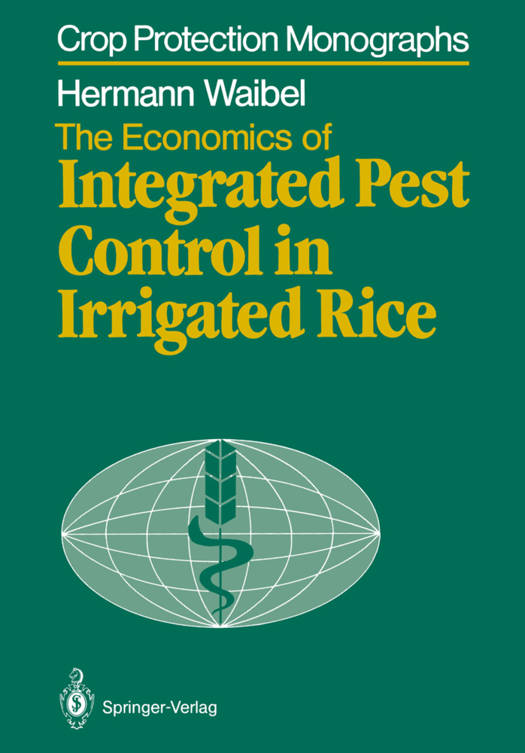
The Economics of Integrated Pest Control in Irrigated Rice
A Case Study from the Philippines
Hermann Waibel
€ 162,45
+ 324 punten
Omschrijving
As a result of the green revolution, the use of yield-increasing inputs such as fer- tilizer and pesticides became a matter of course in irrigated rice farming in Southeast Asia. Pesticides were applied liberally, both as a guarantee against crop failure and as a means of fully utilizing the existing yield potential of the crops. However, since outbreaks of pests, such as the brown planthopper (BPH) or the tungro virus, continued to occur despite the application of chemicals, a change of approach began to take place. It is now being realized more and more in Southeast Asia that crop protection problems cannot be resolved solely by the application of chemicals. In the past several years, increasing efforts have there- fore been made to introduce, as a first step, supervised crop protection, leading gradually to integrated pest management (Kranz, 1982). Although the crop protection problems naturally differ in the different devel- oping countries in Southeast Asia, the economic situation prevailing in these countries can nevertheless be regarded as an important common determinant: pesticide imports use up scarce foreign currency and thus compete with other imports essential to development. For the individual rice farmer, the problem is basically the same: his cash funds are limited and he must carefully weigh whether to use them for purchas- ing pesticides, fertilizer or certified seed. In view of this constraint, it is becom- ing necessary to abandon the purely prophylactic, routine calendar spraying and instead, employ critically timed and need-based pesticide applications.
Specificaties
Betrokkenen
- Auteur(s):
- Uitgeverij:
Inhoud
- Aantal bladzijden:
- 196
- Taal:
- Engels
- Reeks:
Eigenschappen
- Productcode (EAN):
- 9783642713217
- Verschijningsdatum:
- 17/11/2011
- Uitvoering:
- Paperback
- Formaat:
- Trade paperback (VS)
- Afmetingen:
- 170 mm x 244 mm
- Gewicht:
- 353 g


Alleen bij Standaard Boekhandel
+ 324 punten op je klantenkaart van Standaard Boekhandel
CADEAU


Beoordelingen
We publiceren alleen reviews die voldoen aan de voorwaarden voor reviews. Bekijk onze voorwaarden voor reviews.