


- Afhalen na 1 uur in een winkel met voorraad
- Gratis thuislevering in België vanaf € 30
- Ruim aanbod met 7 miljoen producten
- Afhalen na 1 uur in een winkel met voorraad
- Gratis thuislevering in België vanaf € 30
- Ruim aanbod met 7 miljoen producten





Omschrijving
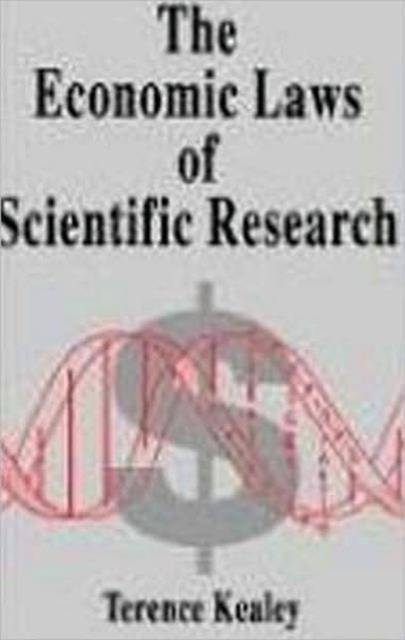
'Dr Kealey's brave, entertaining and learned book makes a powerful case for his unpopular views. It must give pause to any open-minded student of science policy.' - R.C.O. Matthews 'Not since J.D. Bernal has a practising British scientist challenged conventional arguments about the funding of science so originally, and so powerfully.' - David Edgerton, Imperial College Does government funding of science promote economic and cultural growth? This burning question has come to dominate political and academic thought. The evidence seems mixed: Japan flourishes economically neglecting science while the USSR and India who actively promoted government-funded science have declined. The purpose of this book is to assess the myth that government-funded science works economically. Supported by historical argument and international contemporary comparison, Terence Kealey argues that the free market approach rather that of state funding has proved by far the most successful in stimulating science and innovation.
Specificaties
Betrokkenen
- Auteur(s):
- Uitgeverij:
Inhoud
- Aantal bladzijden:
- 382
- Taal:
- Engels
Eigenschappen
- Productcode (EAN):
- 9780312173067
- Verschijningsdatum:
- 15/05/1996
- Uitvoering:
- Paperback
- Formaat:
- Trade paperback (VS)
- Afmetingen:
- 139 mm x 215 mm
- Gewicht:
- 512 g


Alleen bij Standaard Boekhandel
+ 274 punten op je klantenkaart van Standaard Boekhandel
AANGERADEN


Beoordelingen
We publiceren alleen reviews die voldoen aan de voorwaarden voor reviews. Bekijk onze voorwaarden voor reviews.