



Bedankt voor het vertrouwen het afgelopen jaar! Om jou te bedanken bieden we GRATIS verzending (in België) aan op alles gedurende de hele maand januari.
- Afhalen na 1 uur in een winkel met voorraad
- In januari gratis thuislevering in België
- Ruim aanbod met 7 miljoen producten
Bedankt voor het vertrouwen het afgelopen jaar! Om jou te bedanken bieden we GRATIS verzending (in België) aan op alles gedurende de hele maand januari.
- Afhalen na 1 uur in een winkel met voorraad
- In januari gratis thuislevering in België
- Ruim aanbod met 7 miljoen producten





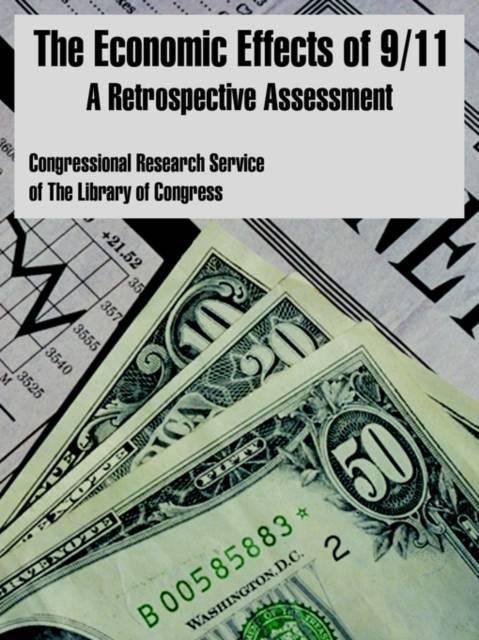
The Economic Effects of 9/11
A Retrospective Assessment
Congressional Research Service, The Library of Congress
Paperback | Engels
€ 23,45
+ 46 punten
Omschrijving
The tragedy of September 11, 2001 was so sudden and devastating that it may be difficult at this point in time to write dispassionately and objectively about its effects on the U.S. economy. This retrospective review will attempt such an undertaking. The loss of lives and property on 9/11 was not large enough to have had a measurable effect on the productive capacity of the United States even though it had a very significant localized effect on New York City and, to a lesser degree, on the greater Washington, D.C. area. Thus, for 9/11 to affect the economy it would have had to have affected the price of an important input, such as energy, or had an adverse effect on aggregate demand via such mechanisms as consumer and business confidence, a financial panic or liquidity crisis, or an international run on the dollar. It was initially thought that aggregate demand was seriously affected, for while the existing data showed that GDP growth was low in the first half of 2001, data published in October showed that GDP had contracted during the 3rd quarter. This led to the claim that "The terrorist attacks pushed a weak economy over the edge into an outright recession." We now know, based on revised data, this is not so. At the time of 9/11 the economy was in its third consecutive quarter of contraction; positive growth resumed in the 4th quarter. This would suggest that any effects from 9/11 on demand were short lived. While this may be true, several events took place before, on, and shortly after 9/11, that made recovery either more rapid than it might have been or made it possible to take place. First, the Federal Reserve had eased credit during the first half of 2001 to stimulate aggregate demand. The economy responds to policy changes with a lag in time. Thus, the public response may have been felt in the 4th quarter giving the appearance that 9/11 had only a limited effect. Second, the Federal Reserve on and immediately after 9/11 took appropriate action to avert a financial panic and liquidity shortage. This was supplemented by support from foreign central banks to shore up the dollar in world markets and limited the contagion of 9/11 from spreading to other national economies. Nevertheless, U.S. trade with other countries, especially Canada, was disrupted. While oil prices spiked briefly, they quickly returned to their pre-9/11 levels. Thus, it can be argued, timely action contained the short run economic effects of 9/11 on the overall economy. Over the longer run 9/11 will adversely affect U.S. productivity growth because resources are being and will be used to ensure the security of production, distribution, finance, and communication.
Specificaties
Betrokkenen
- Auteur(s):
- Uitgeverij:
Inhoud
- Aantal bladzijden:
- 68
- Taal:
- Engels
Eigenschappen
- Productcode (EAN):
- 9781410220653
- Verschijningsdatum:
- 15/02/2005
- Uitvoering:
- Paperback
- Formaat:
- Trade paperback (VS)
- Afmetingen:
- 210 mm x 279 mm
- Gewicht:
- 176 g


Alleen bij Standaard Boekhandel
+ 46 punten op je klantenkaart van Standaard Boekhandel
SOLDEN


Beoordelingen
We publiceren alleen reviews die voldoen aan de voorwaarden voor reviews. Bekijk onze voorwaarden voor reviews.