


- Afhalen na 1 uur in een winkel met voorraad
- Gratis thuislevering in België vanaf € 30
- Ruim aanbod met 7 miljoen producten
- Afhalen na 1 uur in een winkel met voorraad
- Gratis thuislevering in België vanaf € 30
- Ruim aanbod met 7 miljoen producten





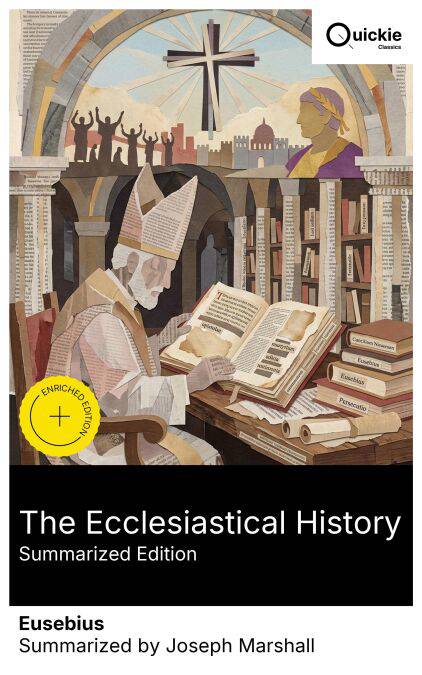
The Ecclesiastical History (Summarized Edition) E-BOOK
Enriched edition. 4th-Century Church Chronicles of Christian Origins, Ecclesiastical Monuments, and the Bishop of Caesarea's Koine Greek Witness
Eusebius
E-book | Engels
€ 0,49
Omschrijving
The Ecclesiastical History surveys the church from the apostles to Constantine, organizing episcopal successions, persecutions, controversies, and councils into a coherent chronicle that inaugurates Christian historiography. Eusebius writes spare, documentary Greek, stitching narrative to copious extracts—letters, martyr-acts, edicts, and lost authors like Hegesippus and Papias. Apologetic in aim, it displays providence, defines orthodoxy (notably his categories of New Testament books), and ends in panegyric. Bishop of Caesarea and pupil of Pamphilus, Eusebius wrote with the unrivaled library that preserved Origen's legacy. Marked by the Diocletianic persecution and later favor at Constantine's court, he joined pastoral memory of martyrs to imperial horizons. His training in chronography and scripture enabled judicious compilation, even as loyalty and credulity sometimes tint his verdicts. This classic repays readers who want both narrative and sources: a portable archive for historians, theologians, and classicists. Read it as a partial yet irreplaceable witness whose citations often preserve the sole remnants of the second and third centuries. For anyone tracing Christianity's path from sect to empire, this is an essential starting point.
Quickie Classics summarizes timeless works with precision, preserving the author's voice and keeping the prose clear, fast, and readable—distilled, never diluted. Enriched Edition extras: Introduction · Synopsis · Historical Context · Author Biography · Brief Analysis · 4 Reflection Q&As · Editorial Footnotes.
Quickie Classics summarizes timeless works with precision, preserving the author's voice and keeping the prose clear, fast, and readable—distilled, never diluted. Enriched Edition extras: Introduction · Synopsis · Historical Context · Author Biography · Brief Analysis · 4 Reflection Q&As · Editorial Footnotes.
Specificaties
Betrokkenen
- Auteur(s):
- Vertaler(s):
- Uitgeverij:
Inhoud
- Aantal bladzijden:
- 423
- Taal:
- Engels
Eigenschappen
- Productcode (EAN):
- 8596547878902
- Verschijningsdatum:
- 9/01/2026
- Uitvoering:
- E-book
- Beveiligd met:
- Digital watermarking
- Formaat:
- ePub


Alleen bij Standaard Boekhandel
Cadeau

AANGERADEN


Beoordelingen
We publiceren alleen reviews die voldoen aan de voorwaarden voor reviews. Bekijk onze voorwaarden voor reviews.