


- Afhalen na 1 uur in een winkel met voorraad
- Gratis thuislevering in België vanaf € 30
- Ruim aanbod met 7 miljoen producten
- Afhalen na 1 uur in een winkel met voorraad
- Gratis thuislevering in België vanaf € 30
- Ruim aanbod met 7 miljoen producten





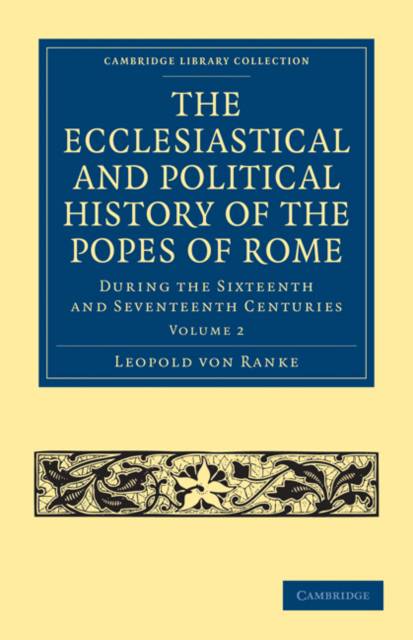
The Ecclesiastical and Political History of the Popes of Rome - Volume 2
During the Sixteenth and Seventeenth Centuries
Leopold Von Ranke
€ 117,95
+ 235 punten
Omschrijving
This translation by Sarah Austin (1793-1867) of German historian Leopold von Ranke's work contributed significantly to early modern history and historiography. By some accounts 'the best living translator' of her time, Austin was a member of circles that included Jeremy Bentham and J. S. Mill. Ranke (1795-1886) worked for most of his life at the University of Berlin, writing several histories covering the fifteenth to seventeenth centuries. Austin's translation recognises Ranke's importance to Western historiography: his methodology stressed the centrality of using primary sources and of the historian's objectivity. Ranke's history engages with a much wider area than his title suggests; indeed, his subject is 'the struggle between Catholicism and Protestantism, between authority and innovation', as Austin writes. Volume 2 is almost wholly concerned with the Counter-Reformation (and coins the term), from 1563 to 1630. These volumes will be of interest to early modern historians and historiographers alike.
Specificaties
Betrokkenen
- Auteur(s):
- Vertaler(s):
- Uitgeverij:
Inhoud
- Aantal bladzijden:
- 606
- Taal:
- Engels
- Reeks:
Eigenschappen
- Productcode (EAN):
- 9781108027120
- Verschijningsdatum:
- 20/01/2011
- Uitvoering:
- Paperback
- Formaat:
- Trade paperback (VS)
- Afmetingen:
- 140 mm x 216 mm
- Gewicht:
- 757 g


Alleen bij Standaard Boekhandel
+ 235 punten op je klantenkaart van Standaard Boekhandel
AANGERADEN


Beoordelingen
We publiceren alleen reviews die voldoen aan de voorwaarden voor reviews. Bekijk onze voorwaarden voor reviews.