


- Afhalen na 1 uur in een winkel met voorraad
- Gratis thuislevering in België vanaf € 30
- Ruim aanbod met 7 miljoen producten
- Afhalen na 1 uur in een winkel met voorraad
- Gratis thuislevering in België vanaf € 30
- Ruim aanbod met 7 miljoen producten





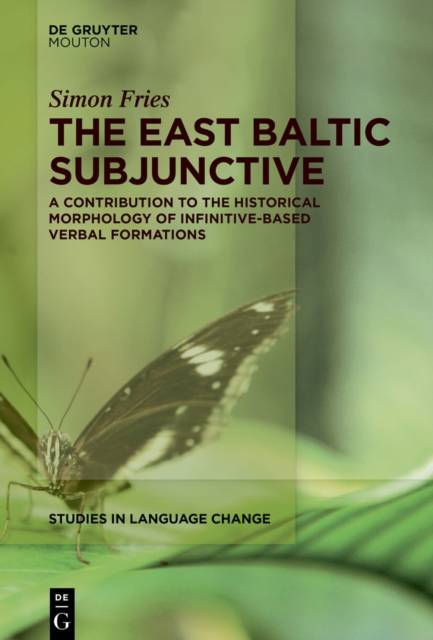
The East Baltic Subjunctive
A Contribution to the Historical Morphology of Infinitive-Based Verbal Formations
Simon Fries
€ 122,95
+ 245 punten
Omschrijving
The two East Baltic languages Lithuanian and Latvian feature a secondary mood of potentiality, known as the subjunctive that ultimately goes back to the supine, an infinitival form. Setting out with a general discussion of the historical relation between the two East Baltic languages, this book seeks to explain why, when and how the supine developed into the subjunctive. In doing so, it provides the first exhaustive account of the evolution of the morphosyntactic paradigm of the subjunctive and all its attested forms in the East Baltic dialects. It thereby contributes to our understanding of the emergence of morphosyntactic structures and the typology of infinitive-based verbal formations.
Specificaties
Betrokkenen
- Auteur(s):
- Uitgeverij:
Inhoud
- Aantal bladzijden:
- 442
- Taal:
- Engels
- Reeks:
- Reeksnummer:
- nr. 27
Eigenschappen
- Productcode (EAN):
- 9783119149204
- Verschijningsdatum:
- 6/10/2025
- Uitvoering:
- Hardcover
- Formaat:
- Genaaid
- Afmetingen:
- 156 mm x 234 mm
- Gewicht:
- 798 g


Alleen bij Standaard Boekhandel
+ 245 punten op je klantenkaart van Standaard Boekhandel
CADEAU

AANGERADEN


Beoordelingen
We publiceren alleen reviews die voldoen aan de voorwaarden voor reviews. Bekijk onze voorwaarden voor reviews.