


- Afhalen na 1 uur in een winkel met voorraad
- Gratis thuislevering in België vanaf € 30
- Ruim aanbod met 7 miljoen producten
- Afhalen na 1 uur in een winkel met voorraad
- Gratis thuislevering in België vanaf € 30
- Ruim aanbod met 7 miljoen producten





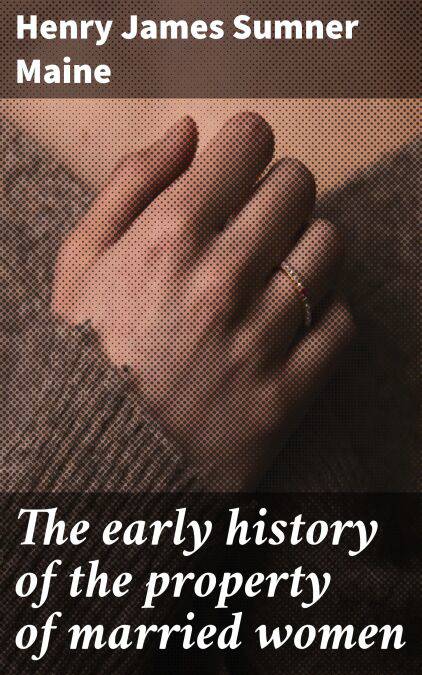
The early history of the property of married women E-BOOK
Unveiling the Legal Evolution of Women's Property Rights in Marriage
Henry James Sumner Maine
E-book | Engels
€ 0,99
€ 1,99
Omschrijving
In "The Early History of the Property of Married Women," Henry James Sumner Maine meticulously examines the legal and societal evolution surrounding the property rights of women throughout history. The work is characterized by Maine'Äôs scholarly rigor, employing a historical and comparative approach to analyze how legal frameworks have impacted women'Äôs autonomy and social status. This exploration situates the book within the broader discourse of legal sociology, showcasing Maine's insights into the interplay of law and gender within various cultures and eras, particularly in the context of English common law and its transformations over time. Henry James Sumner Maine, a preeminent jurist and legal scholar of the 19th century, was deeply influenced by the contemporary debates regarding gender rights and the shifting paradigms of property law. His background as a lawyer and his engagement with anthropological studies informed his perspectives on the rights of women, making this inquiry not only timely but also a reflection of his commitment to social reform. Maine'Äôs astute observations reveal a keen awareness of the historical injustices faced by married women, further underscored by his extensive academic background in law and history. This seminal work is highly recommended for scholars, legal practitioners, and anyone interested in gender studies, legal history, or social anthropology. Maine'Äôs thorough analysis offers invaluable insights into the past and serves as a compelling argument for the ongoing evolution of women's rights within legal systems. Readers will find in this text not only a rich historical narrative but also a critical examination of the implications of property law on women's roles in society.
Specificaties
Betrokkenen
- Auteur(s):
- Uitgeverij:
Inhoud
- Aantal bladzijden:
- 22
- Taal:
- Engels
Eigenschappen
- Productcode (EAN):
- 4064066064792
- Verschijningsdatum:
- 7/12/2020
- Uitvoering:
- E-book
- Beveiligd met:
- Digital watermarking
- Formaat:
- ePub


Alleen bij Standaard Boekhandel
Cadeau

AANGERADEN


Beoordelingen
We publiceren alleen reviews die voldoen aan de voorwaarden voor reviews. Bekijk onze voorwaarden voor reviews.