


- Afhalen na 1 uur in een winkel met voorraad
- Gratis thuislevering in België vanaf € 30
- Ruim aanbod met 7 miljoen producten
- Afhalen na 1 uur in een winkel met voorraad
- Gratis thuislevering in België vanaf € 30
- Ruim aanbod met 7 miljoen producten





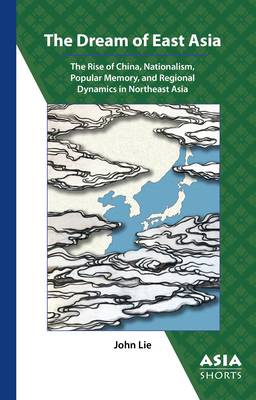
The Dream of East Asia
The Rise of China, Nationalism, Popular Memory, and Regional Dynamics in Northeast Asia
John Lie
€ 27,45
+ 54 punten
Omschrijving
What do we talk about when we talk about East Asia? We are worried about China's emergence as an economic giant and military power that may upset the regional and, indeed, the global status quo. Much more mercurial, however, and therefore more frightening, is that riddle wrapped in a mystery inside an enigma known as North Korea, with its alternate launching of rhetorical fusillades and long-range missiles. And what has happened to Japan, that once mighty economic engine now reduced to a source of bleak news about stagnation and malaise? Then there is South Korea, manufacturer of such technologically advanced products as smartphones, and lately a generator of transnational fads ranging from snail cream to K-pop. Going beyond these standard scripts, The Dream of East Asia presents a framework for understanding contemporary Northeast Asia, focusing on the countries that comprise our conventional understanding of what we call East Asia--namely, China, Taiwan, Japan, and the two Koreas. In so doing, John Lie illuminates regional economic, political, and cultural dynamics.
Specificaties
Betrokkenen
- Auteur(s):
- Uitgeverij:
Inhoud
- Aantal bladzijden:
- 138
- Taal:
- Engels
- Reeks:
Eigenschappen
- Productcode (EAN):
- 9780924304873
- Verschijningsdatum:
- 01/07/2018
- Uitvoering:
- Paperback
- Formaat:
- Trade paperback (VS)
- Afmetingen:
- 152 mm x 229 mm
- Gewicht:
- 213 g


Alleen bij Standaard Boekhandel
+ 54 punten op je klantenkaart van Standaard Boekhandel
Cadeau

AANGERADEN


Beoordelingen
We publiceren alleen reviews die voldoen aan de voorwaarden voor reviews. Bekijk onze voorwaarden voor reviews.