


- Afhalen na 1 uur in een winkel met voorraad
- Gratis thuislevering in België vanaf € 30
- Ruim aanbod met 7 miljoen producten
- Afhalen na 1 uur in een winkel met voorraad
- Gratis thuislevering in België vanaf € 30
- Ruim aanbod met 7 miljoen producten





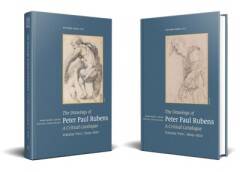
The Drawings of Peter Paul Rubens, a Critical Catalogue, Volume Two (1609-1620)
Part One: Text and Part Two: Images
Anne-Marie Logan, Kristin Lohse Belkin
€ 265,00
+ 530 punten
Omschrijving
This is Volume II in the three-volume catalogue raisonne of the drawings by Rubens covering the years 1609-20. The project is a collaboration between Anne-Marie Logan, to whom belong all the Rubens attributions, and Kristin Lohse Belkin. It is the first publication that presents the artist's entire drawn oeuvre in chronological order, previous such publications containing only selections of drawings. By leafing through the illustrations, this arrangement offers the user a quick visual impression of the variety of techniques, media, subject matter and functions of Rubens's drawings at any one time. Accordingly, Volume II consists of the drawings from the time of Rubens's return from Italy and the establishment of his workshop in Antwerp to the completion of his contribution to the furnishing and decoration of the city's new Jesuit church, today's St. Charles Borromeo. The decade is characterized by a broad range of genres and iconography: large altarpieces stand next to cabinet-size pictures, book illustrations next to designs for tapestry, sculpture and architectural reliefs; religious, mythological and historical subjects alternate with allegories, portraits, exotic hunts and scenes from country life. Copies after other artists' works that constitute such a large part of Rubens's early years discussed in Volume I have given way to original inventions in pen and ink and, above all, by life studies in chalk of the human body, naked or dressed. The whole spectrum of Rubens's extraordinary creativity, nowhere presented as directly and immediately as in his drawings, is there to be contemplated in all its astonishing diversity. Each entry consists of a detailed physical description of the drawing, provenance, exhibition history, full bibliography and a critical, interpretive discussion. All drawings by Rubens as well as a selection of comparative images are reproduced in color.
Specificaties
Betrokkenen
- Auteur(s):
- Uitgeverij:
Inhoud
- Aantal bladzijden:
- 732
- Taal:
- Engels
- Reeks:
- Reeksnummer:
- nr. 23
Eigenschappen
- Productcode (EAN):
- 9782503599533
- Verschijningsdatum:
- 1/06/2023
- Uitvoering:
- Hardcover
- Formaat:
- Genaaid
- Afmetingen:
- 226 mm x 284 mm
- Gewicht:
- 3674 g


Alleen bij Standaard Boekhandel
+ 530 punten op je klantenkaart van Standaard Boekhandel
Cadeau

AANGERADEN


Beoordelingen
We publiceren alleen reviews die voldoen aan de voorwaarden voor reviews. Bekijk onze voorwaarden voor reviews.