


- Afhalen na 1 uur in een winkel met voorraad
- Gratis thuislevering in België vanaf € 30
- Ruim aanbod met 7 miljoen producten
- Afhalen na 1 uur in een winkel met voorraad
- Gratis thuislevering in België vanaf € 30
- Ruim aanbod met 7 miljoen producten





€ 41,45
+ 82 punten
Omschrijving
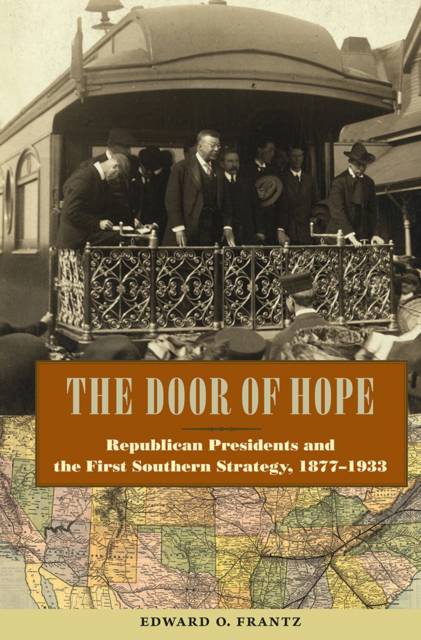
"Frantz provides what most American voters desperately need: a deeply grounded historical background study of how the 'party of Lincoln' became the 'party of Reagan' in our own time. Following all the Republican presidents from Hayes to Hoover on their southern tours, we learn how a sectional party rooted in Union victory and racial egalitarianism transformed over time into a party running against the very meaning of its own origins, while falsely claiming to still represent them. This is new political history of the very best kind and history that helps explain today's politics of white resentment as well as Republican disdain for the public sector and government itself."--David W. Blight, author of American Oracle: The Civil War in the Civil Rights Era "This innovative book takes on vital questions about the politics of sectionalism and race in post-Reconstruction America. No other historian has so thoroughly examined tours of the former Confederate states made by Republican presidents from Rutherford Hayes to Herbert Hoover. With skill and insight, Frantz explores how those trips contributed to Republicans' evolving southern strategy and how a range of Americans--in the North and South, black and white--responded. The time is ripe for the fresh perspective that Frantz offers."--Stephen A. West, Catholic University of America "What a poignantly and perfectly titled book this is. Edward Frantz recounts and analyzes how white northern Republicans pursued a 'southern strategy' starting nearly a century before Richard Nixon coined that phrase. They yearned to open a 'door of hope' to white votes in the former Confederacy. But that meant closing another 'door of hope' to African Americans who had voted Republican during Reconstruction and would have gladly continued to vote that way if they had not been disfranchised. It is a fascinating, heartbreaking story with much resonance to twenty-first-century American politics and race relations."--John Milton Cooper Jr., E. Gordon Fox Professor of American Institutions, Emeritus, University of Wisconsin--Madison How did the political party of Lincoln--of emancipation--become the party of the South and of white resentment? How did Jefferson Davis's old party become the preferred choice for most southern blacks? Most scholars date these transformations to the administrations of Presidents Eisenhower, Nixon, and Reagan. Edward Frantz challenges this myopic view by closely examining the complex and often contradictory rhetoric and symbolism utilized by Republicans between 1877 and 1933. Presidential journeys throughout the South were public rituals that provided a platform for the issues of race, religion, and Republicanism for both white and black southerners. Frantz skillfully notes the common themes and questions scrutinized during this time and finely crafts comparisons between the presidents' speeches and strategies while they debated the power dynamics that underlay their society. This fresh and fast-paced volume brings new voices to the forefront by utilizing the rich resources of the African American press during the administrations of Presidents Hayes, Harrison, McKinley, Roosevelt, Taft, and Hoover. Although these Republicans ultimately failed to build lasting coalitions in the states of the former Confederacy, their tours provided the background for future GOP victories. Edward O. Frantz is associate professor of history at the University of Indianapolis.
Specificaties
Betrokkenen
- Auteur(s):
- Uitgeverij:
Inhoud
- Aantal bladzijden:
- 310
- Taal:
- Engels
- Reeks:
Eigenschappen
- Productcode (EAN):
- 9780813044477
- Verschijningsdatum:
- 15/11/2012
- Uitvoering:
- Paperback
- Formaat:
- Trade paperback (VS)
- Afmetingen:
- 152 mm x 229 mm
- Gewicht:
- 462 g



Alleen bij Standaard Boekhandel
+ 82 punten op je klantenkaart van Standaard Boekhandel
Cadeau

AANGERADEN


Beoordelingen
We publiceren alleen reviews die voldoen aan de voorwaarden voor reviews. Bekijk onze voorwaarden voor reviews.