


- Afhalen na 1 uur in een winkel met voorraad
- Gratis thuislevering in België vanaf € 30
- Ruim aanbod met 7 miljoen producten
- Afhalen na 1 uur in een winkel met voorraad
- Gratis thuislevering in België vanaf € 30
- Ruim aanbod met 7 miljoen producten





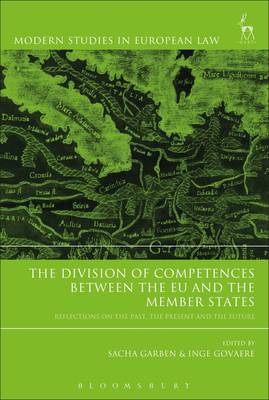
The Division of Competences Between the EU and the Member States
Reflections on the Past, the Present and the Future
€ 98,45
+ 196 punten
Omschrijving
The issue of competence division is of fundamental importance as it reflects the 'power bargain' struck between the Member States and their Union, determining the limits of the authority of the EU as well as the limits of the authority of the Member States. It defines the nature of the EU as a polity, as well as the identity of the Member States. After over six years since the entry into force of the Lisbon Treaty, it is high time to take stock of whether the reforms that were adopted to make the Union's system of division of competences between the EU Member States clearer, more coherent, and better at containing European integration, have been successful. This book asks whether 'the competence problem' has finally been solved.
Given the fundamental importance of this question, this publication will be of interest to a wide audience, from constitutional and substantive EU law scholars to practitioners in the EU institutions and EU legal practice more generally.Specificaties
Betrokkenen
- Uitgeverij:
Inhoud
- Aantal bladzijden:
- 360
- Taal:
- Engels
- Reeks:
Eigenschappen
- Productcode (EAN):
- 9781509936540
- Verschijningsdatum:
- 20/02/2020
- Uitvoering:
- Paperback
- Formaat:
- Trade paperback (VS)
- Afmetingen:
- 156 mm x 234 mm
- Gewicht:
- 498 g

Alleen bij Standaard Boekhandel
+ 196 punten op je klantenkaart van Standaard Boekhandel
Cadeau

AANGERADEN


Beoordelingen
We publiceren alleen reviews die voldoen aan de voorwaarden voor reviews. Bekijk onze voorwaarden voor reviews.