


- Afhalen na 1 uur in een winkel met voorraad
- Gratis thuislevering in België vanaf € 30
- Ruim aanbod met 7 miljoen producten
- Afhalen na 1 uur in een winkel met voorraad
- Gratis thuislevering in België vanaf € 30
- Ruim aanbod met 7 miljoen producten





€ 39,45
+ 78 punten
Omschrijving
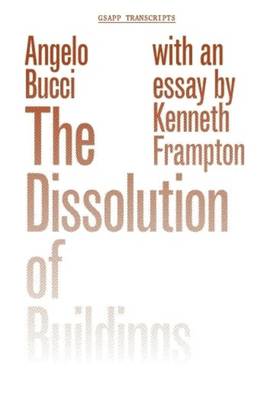
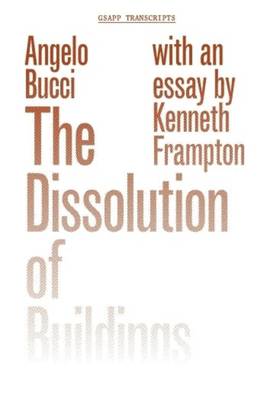
Can an architect pass through walls? Can the city permeate a house? In The Dissolution of Buildings, architect Angelo Bucci presents projects in his native São Paulo and abroad. Advocating an architecture that is "the opposite of global action," his work responds to the topography of the city and to its urban environment. In a lecture delivered at Columbia University's Graduate School of Architecture, Planning and Preservation, Bucci discusses work designed with his firm SPBR, projects that span from the scale of the house to the city. His built work is here accompanied by an excerpt from his doctoral dissertation, which explores how the devices available to architecture--and the sectional manipulation of groundplanes in particular--can mitigate some of the inequities and exclusions built in to the fabric of the contemporary city. An essay by Kenneth Frampton frames these projects within the rich lineage of Brazilian house design and members of the Paulista school such as Paulo Mendes da Rocha and João Batista Vilanova Artigas.
Specificaties
Betrokkenen
- Auteur(s):
- Uitgeverij:
Inhoud
- Aantal bladzijden:
- 128
- Taal:
- Engels
- Reeks:
- Reeksnummer:
- nr. 5
Eigenschappen
- Productcode (EAN):
- 9781941332184
- Verschijningsdatum:
- 22/11/2015
- Uitvoering:
- Paperback
- Formaat:
- Trade paperback (VS)
- Afmetingen:
- 122 mm x 185 mm
- Gewicht:
- 113 g


Alleen bij Standaard Boekhandel
+ 78 punten op je klantenkaart van Standaard Boekhandel
Cadeau

AANGERADEN


Beoordelingen
We publiceren alleen reviews die voldoen aan de voorwaarden voor reviews. Bekijk onze voorwaarden voor reviews.