


- Afhalen na 1 uur in een winkel met voorraad
- Gratis thuislevering in België vanaf € 30
- Ruim aanbod met 7 miljoen producten
- Afhalen na 1 uur in een winkel met voorraad
- Gratis thuislevering in België vanaf € 30
- Ruim aanbod met 7 miljoen producten





€ 112,45
+ 224 punten
Omschrijving
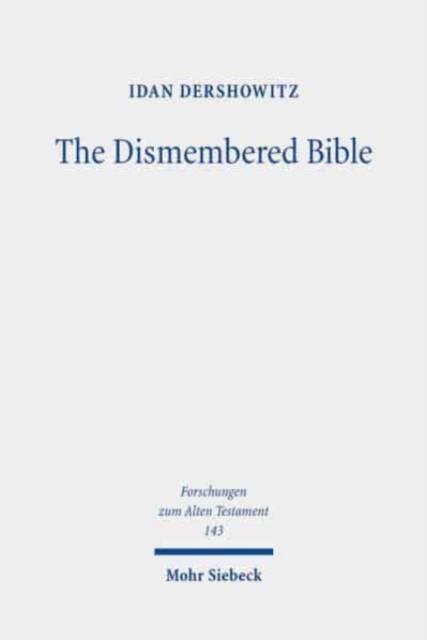
It is often presumed that biblical redaction was invariably done using scribal methods, meaning that when editors sought to modify or compile existing texts, they would do so in the process of rewriting them upon new scrolls. There is, however, substantial evidence pointing to an alternative scenario: Various sections of the Hebrew Bible appear to have been created through a process of material redaction. In some cases, ancient editors simply appended new sheets to existing scrolls. Other times, they literally cut and pasted their sources, carving out patches of text from multiple manuscripts and then gluing them together like a collage. Idan Dershowitz shows how this surprising technique left behind telltale traces in the biblical text - especially when the editors made mistakes - allowing us to reconstruct their modus operandi. Material evidence from the ancient Near East and elsewhere further supports his hypothesis.
Specificaties
Betrokkenen
- Auteur(s):
- Uitgeverij:
Inhoud
- Aantal bladzijden:
- 188
- Taal:
- Engels
- Reeks:
- Reeksnummer:
- nr. 143
Eigenschappen
- Productcode (EAN):
- 9783161598609
- Verschijningsdatum:
- 1/01/2021
- Uitvoering:
- Hardcover
- Formaat:
- Genaaid
- Afmetingen:
- 152 mm x 231 mm
- Gewicht:
- 453 g


Alleen bij Standaard Boekhandel
+ 224 punten op je klantenkaart van Standaard Boekhandel
Cadeau

AANGERADEN


Beoordelingen
We publiceren alleen reviews die voldoen aan de voorwaarden voor reviews. Bekijk onze voorwaarden voor reviews.