


- Afhalen na 1 uur in een winkel met voorraad
- Gratis thuislevering in België vanaf € 30
- Ruim aanbod met 7 miljoen producten
- Afhalen na 1 uur in een winkel met voorraad
- Gratis thuislevering in België vanaf € 30
- Ruim aanbod met 7 miljoen producten





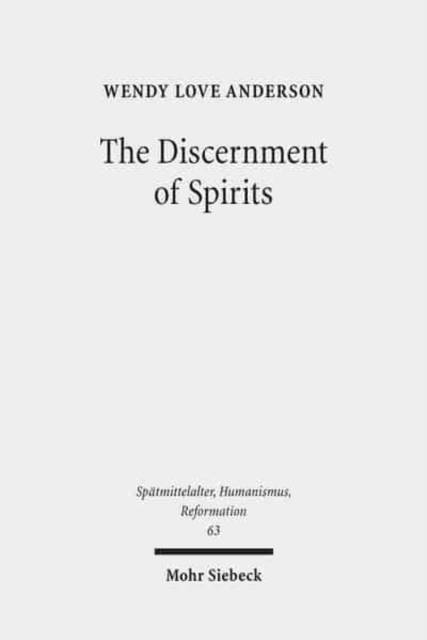
The Discernment of Spirits
Assessing Visions and Visionaries in the Late Middle Ages
Wendy Love Anderson
€ 112,45
+ 224 punten
Omschrijving
"[Anderson] succeeds in neatly fitting together selected pieces of the history of discernment of spirits to provide a valuable, readable description of the contours of its evolution in the late Middle Ages." -- Debra L. Stoudt, Virginia Polytechnic Institute and State University, The Medieval Review Late medieval Christians lived in a world of visions, but they knew that not all visions came from God: angels, demons, illness, nature, or passion could also inspire an apparent divine visitation. During the thirteenth and fourteenth centuries, the involvement of visionaries in everything from reform movements to military campaigns to papal schisms raised the political and spiritual stakes of determining whether or not a vision was truly from God. In response, a diverse group of medieval thinkers - including men and women, clergy and laity, visionaries and theologians - gradually began to transform the loose patristic readings of Pauline discretio spirituum into a system with the potential to distinguish between true and false visions and between genuine and delusional visionaries. Wendy Love Anderson chronicles the historical, political, and spiritual struggles behind the flowering of late medieval mysticism and what came to be seen as the Christian doctrine of discernment of spirits.
Specificaties
Betrokkenen
- Auteur(s):
- Uitgeverij:
Inhoud
- Aantal bladzijden:
- 266
- Taal:
- Engels
- Reeks:
Eigenschappen
- Productcode (EAN):
- 9783161516641
- Verschijningsdatum:
- 1/12/2011
- Uitvoering:
- Hardcover
- Formaat:
- Genaaid
- Afmetingen:
- 157 mm x 231 mm
- Gewicht:
- 539 g


Alleen bij Standaard Boekhandel
+ 224 punten op je klantenkaart van Standaard Boekhandel
AANGERADEN


Beoordelingen
We publiceren alleen reviews die voldoen aan de voorwaarden voor reviews. Bekijk onze voorwaarden voor reviews.