


- Afhalen na 1 uur in een winkel met voorraad
- Gratis thuislevering in België vanaf € 30
- Ruim aanbod met 7 miljoen producten
- Afhalen na 1 uur in een winkel met voorraad
- Gratis thuislevering in België vanaf € 30
- Ruim aanbod met 7 miljoen producten




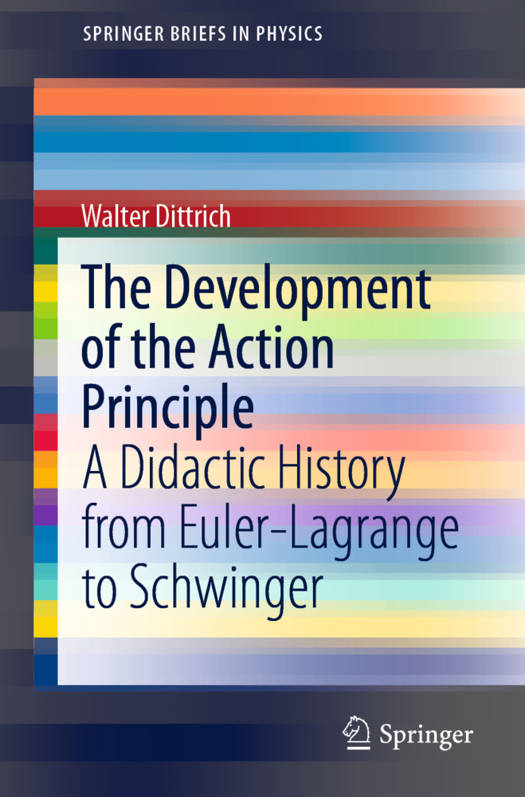
The Development of the Action Principle
A Didactic History from Euler-Lagrange to Schwinger
Walter Dittrich
€ 75,95
+ 151 punten
Omschrijving
This book describes the historical development of the principle of stationary action from the 17th to the 20th centuries. Reference is made to the most important contributors to this topic, in particular Bernoullis, Leibniz, Euler, Lagrange and Laplace. The leading theme is how the action principle is applied to problems in classical physics such as hydrodynamics, electrodynamics and gravity, extending also to the modern formulation of quantum mechanics and quantum field theory, especially quantum electrodynamics. A critical analysis of operator versus c-number field theory is given. The book contains many worked examples. In particular, the term "vacuum" is scrutinized.The book is aimed primarily at actively working researchers, graduate students and historians interested in the philosophical interpretation and evolution of physics; in particular, in understanding the action principle and its application to a wide range of natural phenomena.
Specificaties
Betrokkenen
- Auteur(s):
- Uitgeverij:
Inhoud
- Aantal bladzijden:
- 135
- Taal:
- Engels
- Reeks:
Eigenschappen
- Productcode (EAN):
- 9783030691042
- Verschijningsdatum:
- 30/05/2021
- Uitvoering:
- Paperback
- Formaat:
- Trade paperback (VS)
- Afmetingen:
- 156 mm x 234 mm
- Gewicht:
- 222 g


Alleen bij Standaard Boekhandel
+ 151 punten op je klantenkaart van Standaard Boekhandel
AANGERADEN


Beoordelingen
We publiceren alleen reviews die voldoen aan de voorwaarden voor reviews. Bekijk onze voorwaarden voor reviews.