


- Afhalen na 1 uur in een winkel met voorraad
- Gratis thuislevering in België vanaf € 30
- Ruim aanbod met 7 miljoen producten
- Afhalen na 1 uur in een winkel met voorraad
- Gratis thuislevering in België vanaf € 30
- Ruim aanbod met 7 miljoen producten





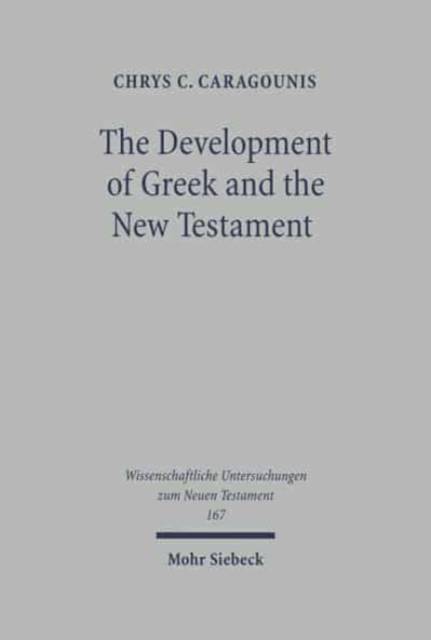
The Development of Greek and the New Testament
Morphology, Syntax, Phonology, and Textual Transmission
Chrys C. Caragounis
€ 188,45
+ 376 punten
Omschrijving
The introduction of the Erasmian pronunciation in 1528 had two dire consequences: Greek was divided into ancient and modern - a division that led to the neglect of the later periods of the language, and the pronunciation applied made impossible the detection of many communicatory aspects and obscured many text-critical problems. Chrys C. Caragounis argues for the unity of the Greek language from Mycenaean times to the present. The New Testament appears during the time of transition (335 B.C. - A.D. 565) from ancient to modern Greek. Morphological and syntactical analysis shows that the New Testament often adumbrates morphological and syntactical changes that characterize later Greek, up to Neohellenic. This means that the evidence of Later Greek is often a sine qua non for a fuller understanding of the New Testament. The Historical Greek Pronunciation helps us detect rhetorical figures, wordplays, etc. that the Erasmian pronunciation has missed, and its application on MS readings solves many text-critical cruces.
Specificaties
Betrokkenen
- Auteur(s):
- Uitgeverij:
Inhoud
- Aantal bladzijden:
- 752
- Taal:
- Engels
- Reeks:
Eigenschappen
- Productcode (EAN):
- 9783161482908
- Verschijningsdatum:
- 8/07/2004
- Uitvoering:
- Hardcover
- Formaat:
- Linnen over kaft
- Afmetingen:
- 164 mm x 238 mm
- Gewicht:
- 1113 g


Alleen bij Standaard Boekhandel
+ 376 punten op je klantenkaart van Standaard Boekhandel
Cadeau

AANGERADEN


Beoordelingen
We publiceren alleen reviews die voldoen aan de voorwaarden voor reviews. Bekijk onze voorwaarden voor reviews.