


- Afhalen na 1 uur in een winkel met voorraad
- Gratis thuislevering in België vanaf € 30
- Ruim aanbod met 7 miljoen producten
- Afhalen na 1 uur in een winkel met voorraad
- Gratis thuislevering in België vanaf € 30
- Ruim aanbod met 7 miljoen producten





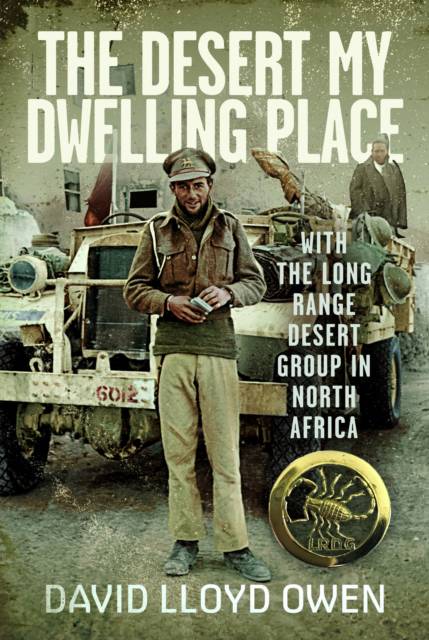
The Desert My Dwelling Place
With the Long Range Desert Group in North Africa
David Lloyd Owen
Hardcover | Engels
€ 34,95
+ 69 punten
Omschrijving
Lloyd Owen recounts the LRDG's desert campaigns, revealing survival, camaraderie, and the decisive quietly lethal craft that shaped North Africa's war
In mid 1941, David Lloyd Owen, aged 24, joined the Long Range Desert Group (LRDG) as a young patrol commander. He soon found his feet learning the arts of survival and navigation deep in the Libyan desert, and recounts in detail the characters in his Y Patrol, their operational methods, their team spirit and camaraderie.
The LRDG was primarily concerned with reconnaissance and intelligence gathering, but was also allowed the occasional 'beat-up'. With astonishing navigational skills based on their founder Bagnold's invention of the sun-compass and unparalleled long-distance signal communications, the LRDG became masters of the deep desert - an area that was effectively a no-go zone for the Axis forces.
Here, Lloyd Owen describes the origins of the LRDG and the formation and first operations of the SAS under David Stirling, and how the two units worked so closely and successfully together for the rest of the campaign in the desert and thereafter. 'Popski's Private Army' also worked with the LRDG and the author recounts his contacts with them.
For many months a significant part of the LRDG's work involved keeping a watch on the main coast road, counting all enemy traffic and movement in both directions along it, and passing invaluable intelligence immediately back to HQ in Cairo. Other patrols not on the Road Watch were tasked with all kinds of jobs, and Y Patrol was involved in the 1942 raid on Tobruk, after which Lloyd Owen was badly wounded by a Heinkel cannon. He describes their tough military role fulfilled by hand-picked, highly trained and disciplined men, relieved by occasional raucous and happy breaks back in the flesh pots of wartime Cairo.
The Desert My Dwelling Place covers Lloyd Owen's own triumphs and frustrations, as well as those of the LRDG during the desert campaign, which ended with Rommel being finally driven out of North Africa after Montgomery's victory at El Alamein.
In mid 1941, David Lloyd Owen, aged 24, joined the Long Range Desert Group (LRDG) as a young patrol commander. He soon found his feet learning the arts of survival and navigation deep in the Libyan desert, and recounts in detail the characters in his Y Patrol, their operational methods, their team spirit and camaraderie.
The LRDG was primarily concerned with reconnaissance and intelligence gathering, but was also allowed the occasional 'beat-up'. With astonishing navigational skills based on their founder Bagnold's invention of the sun-compass and unparalleled long-distance signal communications, the LRDG became masters of the deep desert - an area that was effectively a no-go zone for the Axis forces.
Here, Lloyd Owen describes the origins of the LRDG and the formation and first operations of the SAS under David Stirling, and how the two units worked so closely and successfully together for the rest of the campaign in the desert and thereafter. 'Popski's Private Army' also worked with the LRDG and the author recounts his contacts with them.
For many months a significant part of the LRDG's work involved keeping a watch on the main coast road, counting all enemy traffic and movement in both directions along it, and passing invaluable intelligence immediately back to HQ in Cairo. Other patrols not on the Road Watch were tasked with all kinds of jobs, and Y Patrol was involved in the 1942 raid on Tobruk, after which Lloyd Owen was badly wounded by a Heinkel cannon. He describes their tough military role fulfilled by hand-picked, highly trained and disciplined men, relieved by occasional raucous and happy breaks back in the flesh pots of wartime Cairo.
The Desert My Dwelling Place covers Lloyd Owen's own triumphs and frustrations, as well as those of the LRDG during the desert campaign, which ended with Rommel being finally driven out of North Africa after Montgomery's victory at El Alamein.
Specificaties
Betrokkenen
- Auteur(s):
- Uitgeverij:
Inhoud
- Aantal bladzijden:
- 256
- Taal:
- Engels
Eigenschappen
- Productcode (EAN):
- 9781036141745
- Verschijningsdatum:
- 30/05/2026
- Uitvoering:
- Hardcover
- Formaat:
- Genaaid
- Afmetingen:
- 159 mm x 235 mm
- Gewicht:
- 508 g


Alleen bij Standaard Boekhandel
+ 69 punten op je klantenkaart van Standaard Boekhandel
Cadeau

AANGERADEN


Beoordelingen
We publiceren alleen reviews die voldoen aan de voorwaarden voor reviews. Bekijk onze voorwaarden voor reviews.