



Je cadeautjes zeker op tijd in huis hebben voor de feestdagen? Kom langs in onze winkels en vind het perfecte geschenk!
- Afhalen na 1 uur in een winkel met voorraad
- Gratis thuislevering in België vanaf € 30
- Ruim aanbod met 7 miljoen producten
Je cadeautjes zeker op tijd in huis hebben voor de feestdagen? Kom langs in onze winkels en vind het perfecte geschenk!
- Afhalen na 1 uur in een winkel met voorraad
- Gratis thuislevering in België vanaf € 30
- Ruim aanbod met 7 miljoen producten





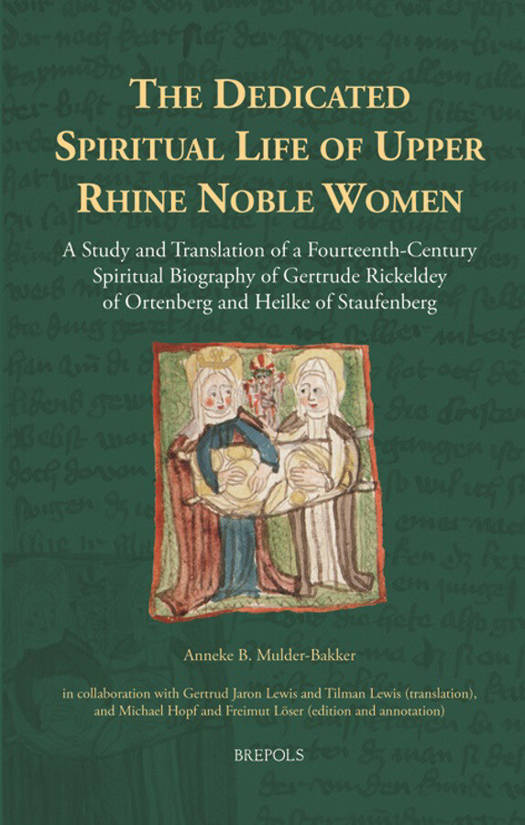
The Dedicated Spiritual Life of Upper Rhine Noble Women
A Study and Translation of a Fourteenth-Century Spiritual Biography of Gertrude Rickeldey of Ortenberg and Heilke of Staufenberg
Anneke B Mulder-Bakker
Hardcover | Engels
€ 95,40
+ 190 punten
Omschrijving
Lady Gertrude Rickeldey of Ortenberg (d. 1335) was a noble widow who lived a spiritual, but secular life in her own household, first in Offenburg and later in Strasbourg, the economic and cultural heart of southern Germany. Her life story was written by a lay woman from Gertrude's entourage and was based on numerous stories told by Gertrude's lifelong companion, Heilke of Staufenberg (d. after 1335). The biographer gives us a view of the aristocratic household, reports the many conversations that the women held with fellow believers and learned mendicants, and shows how they led a life of devotion in their own home, but at the same time, operated as full citizens of the city, taking part in both the civic and religious politics of Strasbourg. The details of her account reveal that the women did not take vows or renounce their possessions. They did not abandon their own decision-making power. Instead, they were mistresses of their own lives and developed into ethicae of stature. Following historical investigations into Gertrude's and Heilke's life (Part I) is an edition and translation of the fourteenth-century text on which these studies are based (Part II).
Specificaties
Betrokkenen
- Auteur(s):
- Uitgeverij:
Inhoud
- Aantal bladzijden:
- 320
- Taal:
- Engels
Eigenschappen
- Productcode (EAN):
- 9782503574318
- Verschijningsdatum:
- 31/01/2018
- Uitvoering:
- Hardcover
- Formaat:
- Genaaid
- Afmetingen:
- 165 mm x 239 mm
- Gewicht:
- 657 g


Alleen bij Standaard Boekhandel
+ 190 punten op je klantenkaart van Standaard Boekhandel
CADEAU


Beoordelingen
We publiceren alleen reviews die voldoen aan de voorwaarden voor reviews. Bekijk onze voorwaarden voor reviews.