


- Afhalen na 1 uur in een winkel met voorraad
- Gratis thuislevering in België vanaf € 30
- Ruim aanbod met 7 miljoen producten
- Afhalen na 1 uur in een winkel met voorraad
- Gratis thuislevering in België vanaf € 30
- Ruim aanbod met 7 miljoen producten





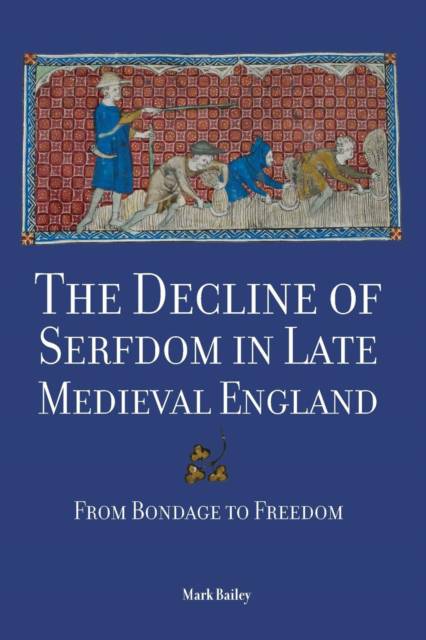
The Decline of Serfdom in Late Medieval England
From Bondage to Freedom
Mark Bailey
Paperback | Engels
€ 62,95
+ 125 punten
Uitvoering
Omschrijving
Scholars from various disciplines have long debated why western Europe in general, and England in particular, led the transition from feudalism to capitalism. The decline of serfdom between c.1300 and c.1500 in England is central to this "Transition Debate," because it transformed the lives of ordinary people and opened up the markets in land and labour. Yet, despite its historical importance, there has been no major survey or reassessment of decline of serfdom for decades. Consequently, the debate over its causes, and its legacy to early modern England, remains unresolved. This dazzling study provides an accessible and up-to-date survey of the decline of serfdom in England, applying a new methodology for establishing both its chronology and causes to thousands of court rolls from 38 manors located across the south Midlands and East Anglia. It presents a ground-breaking reassessment, challenging many of the traditional interpretations of the economy and society of late-medieval England, and, indeed, of the very nature of serfdom itself. Mark Bailey is High Master of St Paul's School, and Professor of Later Medieval History at the University of East Anglia. He has published extensively on the economic and social history of England between c.1200 and c.1500, including Medieval Suffolk (2007).
Specificaties
Betrokkenen
- Auteur(s):
- Uitgeverij:
Inhoud
- Aantal bladzijden:
- 385
- Taal:
- Engels
Eigenschappen
- Productcode (EAN):
- 9781783271283
- Verschijningsdatum:
- 16/06/2016
- Uitvoering:
- Paperback
- Formaat:
- Trade paperback (VS)
- Afmetingen:
- 156 mm x 234 mm
- Gewicht:
- 539 g


Alleen bij Standaard Boekhandel
+ 125 punten op je klantenkaart van Standaard Boekhandel
Cadeau

AANGERADEN


Beoordelingen
We publiceren alleen reviews die voldoen aan de voorwaarden voor reviews. Bekijk onze voorwaarden voor reviews.