



Je cadeautjes zeker op tijd in huis hebben voor de feestdagen? Kom langs in onze winkels en vind het perfecte geschenk!
- Afhalen na 1 uur in een winkel met voorraad
- Gratis thuislevering in België vanaf € 30
- Ruim aanbod met 7 miljoen producten
Je cadeautjes zeker op tijd in huis hebben voor de feestdagen? Kom langs in onze winkels en vind het perfecte geschenk!
- Afhalen na 1 uur in een winkel met voorraad
- Gratis thuislevering in België vanaf € 30
- Ruim aanbod met 7 miljoen producten





€ 161,45
+ 322 punten
Omschrijving
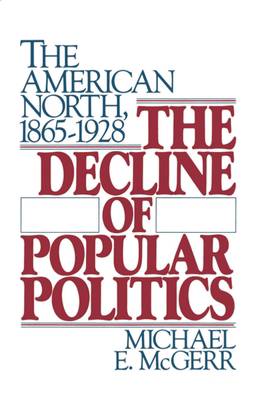
In the 1984 presidential election, only half of the eligible electorate exercised its right to vote. Why does politics no longer excite many--of not most Americans?
Michael McGerr attributes the decline in voting in the American North to the transformation of political style after the Civil War. The Decline of Popular Politics vividly recreates a vanished world of democratic ritual and charts its disappearance in the rapid change of industrial society.
A century ago, political campaigns meant torchlight parades, spectacular pageants staged by opposing parties, and crowds of citizens attired in military dress or proudly displaying their crafts at well-attended rallies. The intense partisanship of presidential campaigns and party newspapers made political choice easy for people from all walks of life. In the late 1860s and 1870s, however, the rise of liberalism led to a rejection of partisanship by the press and a move towards "educational," rather than spectacular, electioneering. This style then lost out at the turn of the century to the sensational journalism of Joseph Pulitzer and William Randolph Hearst, and the "advertised" campaigning of Mark Hanna and other politicians. McGerr shows how these new developments made it increasingly difficult for many Northerners to link their political impulses with political action. By the 1920s, Northern politics resembled our own public life today. A vital democratic culture had yielded to advertised campaigns, an emphasis on personalities rather than issues or partisanship, and low voter turnout.
Michael McGerr attributes the decline in voting in the American North to the transformation of political style after the Civil War. The Decline of Popular Politics vividly recreates a vanished world of democratic ritual and charts its disappearance in the rapid change of industrial society.
A century ago, political campaigns meant torchlight parades, spectacular pageants staged by opposing parties, and crowds of citizens attired in military dress or proudly displaying their crafts at well-attended rallies. The intense partisanship of presidential campaigns and party newspapers made political choice easy for people from all walks of life. In the late 1860s and 1870s, however, the rise of liberalism led to a rejection of partisanship by the press and a move towards "educational," rather than spectacular, electioneering. This style then lost out at the turn of the century to the sensational journalism of Joseph Pulitzer and William Randolph Hearst, and the "advertised" campaigning of Mark Hanna and other politicians. McGerr shows how these new developments made it increasingly difficult for many Northerners to link their political impulses with political action. By the 1920s, Northern politics resembled our own public life today. A vital democratic culture had yielded to advertised campaigns, an emphasis on personalities rather than issues or partisanship, and low voter turnout.
Specificaties
Betrokkenen
- Auteur(s):
- Uitgeverij:
Inhoud
- Aantal bladzijden:
- 322
- Taal:
- Engels
Eigenschappen
- Productcode (EAN):
- 9780195054248
- Verschijningsdatum:
- 19/05/1988
- Uitvoering:
- Paperback
- Formaat:
- Trade paperback (VS)
- Afmetingen:
- 138 mm x 218 mm
- Gewicht:
- 426 g


Alleen bij Standaard Boekhandel
+ 322 punten op je klantenkaart van Standaard Boekhandel
CADEAU


Beoordelingen
We publiceren alleen reviews die voldoen aan de voorwaarden voor reviews. Bekijk onze voorwaarden voor reviews.