


- Afhalen na 1 uur in een winkel met voorraad
- Gratis thuislevering in België vanaf € 30
- Ruim aanbod met 7 miljoen producten
- Afhalen na 1 uur in een winkel met voorraad
- Gratis thuislevering in België vanaf € 30
- Ruim aanbod met 7 miljoen producten





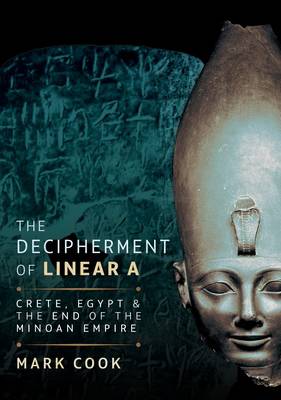
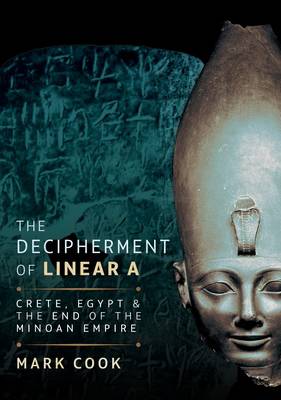
The Decipherment of Linear a
Crete, Egypt and the End of the Minoan Empire
Mark Cook
Hardcover | Engels
€ 97,45
+ 194 punten
Omschrijving
Deciphers the mysterious Bronze Age Linear A script, revealing it as Middle Egyptian accounting records from Crete.
Linear A is a Middle and Late Bronze Age script principally used on Crete. Dated to 1800 - 1450 BC, it was discovered by archaeologist Sir Arthur Evans in 1900 and for over 120 years it has - until now - defied decipherment.
In his book, author Mark Cook, a forensic accountant, demonstrates how he deciphered Linear A. His work describes how he first approached decipherment by setting aside commonly held misconceptions. Previous decipherment attempts typically incorrectly assumed the underlying language was an unknown Minoan language (Crete being the heart of the Minoan Empire), or misconstrued its relationship with Linear B (the earliest written form of Greek, which replaced it).
Linear A is found mainly on clay tablets recording ephemeral accounting information, and Mark Cook tackled the decipherment as an accountant, focussing on the numbers, noting the mathematical relationships between the items recorded (which relationships were evident in the later Linear B script where the same things were being recorded), and analysing the characters used to record them.
Mark Cook demonstrates that Linear A is Middle Egyptian, written in a form of shorthand used by the later Greeks and Romans, using hieroglyphs that were modified and simplified to be incised quickly and easily in wet clay. Many of the tablets, he reveals, are Egyptian taxation records.
Based on the tablets he translates, and the reinterpretation of Egyptian evidence, Mark Cook concludes that New Kingdom Egypt ultimately came to rule Crete for a brief period, rewriting what we know of the end of the Minoan Empire.
Linear A is a Middle and Late Bronze Age script principally used on Crete. Dated to 1800 - 1450 BC, it was discovered by archaeologist Sir Arthur Evans in 1900 and for over 120 years it has - until now - defied decipherment.
In his book, author Mark Cook, a forensic accountant, demonstrates how he deciphered Linear A. His work describes how he first approached decipherment by setting aside commonly held misconceptions. Previous decipherment attempts typically incorrectly assumed the underlying language was an unknown Minoan language (Crete being the heart of the Minoan Empire), or misconstrued its relationship with Linear B (the earliest written form of Greek, which replaced it).
Linear A is found mainly on clay tablets recording ephemeral accounting information, and Mark Cook tackled the decipherment as an accountant, focussing on the numbers, noting the mathematical relationships between the items recorded (which relationships were evident in the later Linear B script where the same things were being recorded), and analysing the characters used to record them.
Mark Cook demonstrates that Linear A is Middle Egyptian, written in a form of shorthand used by the later Greeks and Romans, using hieroglyphs that were modified and simplified to be incised quickly and easily in wet clay. Many of the tablets, he reveals, are Egyptian taxation records.
Based on the tablets he translates, and the reinterpretation of Egyptian evidence, Mark Cook concludes that New Kingdom Egypt ultimately came to rule Crete for a brief period, rewriting what we know of the end of the Minoan Empire.
Specificaties
Betrokkenen
- Auteur(s):
- Uitgeverij:
Inhoud
- Aantal bladzijden:
- 544
- Taal:
- Engels
Eigenschappen
- Productcode (EAN):
- 9781036134631
- Verschijningsdatum:
- 30/12/2025
- Uitvoering:
- Hardcover
- Formaat:
- Genaaid
- Afmetingen:
- 174 mm x 248 mm
- Gewicht:
- 1519 g


Alleen bij Standaard Boekhandel
+ 194 punten op je klantenkaart van Standaard Boekhandel
Cadeau

AANGERADEN


Beoordelingen
We publiceren alleen reviews die voldoen aan de voorwaarden voor reviews. Bekijk onze voorwaarden voor reviews.