


- Afhalen na 1 uur in een winkel met voorraad
- Gratis thuislevering in België vanaf € 30
- Ruim aanbod met 7 miljoen producten
- Afhalen na 1 uur in een winkel met voorraad
- Gratis thuislevering in België vanaf € 30
- Ruim aanbod met 7 miljoen producten





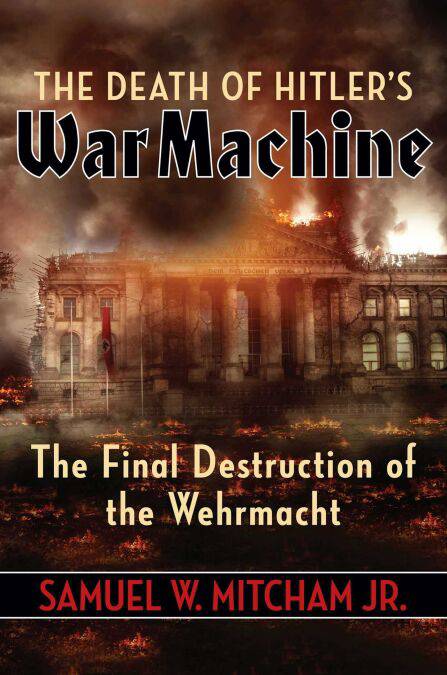
The Death of Hitler's War Machine E-BOOK
The Final Destruction of the Wehrmacht
Samuel W. Mitcham
E-book | Engels
€ 16,76
+ 16 punten
Omschrijving
It was the endgame for Hitler's Reich.
In the winter of 1944–45, Germany staked everything on its surprise campaign in the Ardennes, the “Battle of the Bulge.” But when American and Allied forces recovered from their initial shock, the German forces were left fighting for their very survival—especially on the Eastern Front, where the Soviet army was intent on matching, or even surpassing, Nazi atrocities.
At the mercy of the Fuehrer, who refused to acknowledge reality and forbade German retreats, the Wehrmacht was slowly annihilated in horrific battles that have rarely been adequately covered in histories of the Second World War—especially the brutal Soviet siege of Budapest, which became known as the “Stalingrad of the Waffen-SS.”
Capping a career that has produced more than forty books, Dr. Samuel W. Mitcham now tells the extraordinary tale of how Hitler’s once-dreaded war machine came to a cataclysmic end, from the Battle of the Bulge in December 1944 to the German surrender in May 1945.
Making use of German wartime papers and memoirs—some rarely seen in English-language sources—Mitcham’s sweeping narrative deserves a place on the shelf of every student of World War II.
In the winter of 1944–45, Germany staked everything on its surprise campaign in the Ardennes, the “Battle of the Bulge.” But when American and Allied forces recovered from their initial shock, the German forces were left fighting for their very survival—especially on the Eastern Front, where the Soviet army was intent on matching, or even surpassing, Nazi atrocities.
At the mercy of the Fuehrer, who refused to acknowledge reality and forbade German retreats, the Wehrmacht was slowly annihilated in horrific battles that have rarely been adequately covered in histories of the Second World War—especially the brutal Soviet siege of Budapest, which became known as the “Stalingrad of the Waffen-SS.”
Capping a career that has produced more than forty books, Dr. Samuel W. Mitcham now tells the extraordinary tale of how Hitler’s once-dreaded war machine came to a cataclysmic end, from the Battle of the Bulge in December 1944 to the German surrender in May 1945.
Making use of German wartime papers and memoirs—some rarely seen in English-language sources—Mitcham’s sweeping narrative deserves a place on the shelf of every student of World War II.
Specificaties
Betrokkenen
- Auteur(s):
- Uitgeverij:
Inhoud
- Aantal bladzijden:
- 320
- Taal:
- Engels
Eigenschappen
- Productcode (EAN):
- 9781684511846
- Verschijningsdatum:
- 1/02/2021
- Uitvoering:
- E-book
- Beveiligd met:
- Adobe DRM
- Formaat:
- ePub



Alleen bij Standaard Boekhandel
+ 16 punten op je klantenkaart van Standaard Boekhandel
Cadeau

AANGERADEN


Beoordelingen
We publiceren alleen reviews die voldoen aan de voorwaarden voor reviews. Bekijk onze voorwaarden voor reviews.