


- Afhalen na 1 uur in een winkel met voorraad
- Gratis thuislevering in België vanaf € 30
- Ruim aanbod met 7 miljoen producten
- Afhalen na 1 uur in een winkel met voorraad
- Gratis thuislevering in België vanaf € 30
- Ruim aanbod met 7 miljoen producten





€ 36,45
+ 72 punten
Omschrijving
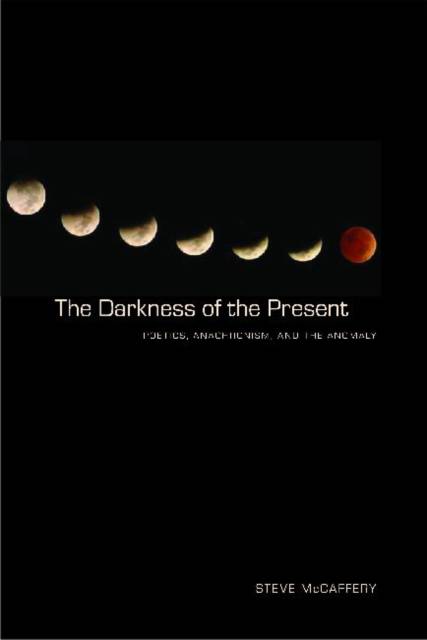
The Darkness of the Present includes essays that collectively investigate the roles of anomaly and anachronism as they work to unsettle commonplace notions of the "contemporary" in the field of poetics. In the eleven essays of The Darkness of the Present, poet and critic Steve McCaffery argues that by approaching the past and the present as unified entities, the contemporary is made historical at the same time as the historical is made contemporary.
McCaffery's writings work against the urge to classify works by placing them in standard literary periods or disciplinary partitions. Instead, McCaffery offers a variety of insights into unusual and ingenious affiliations between poetic works that may have previously seemed distinctive. He questions the usual associations of originality and precedence. In the process, he repositions many texts within genealogies separate from the ones to which they are traditionally assigned.
The chapters in The Darkness of the Present might seem to present an eclectic façade and can certainly be read independently. They are linked, however, by a common preoccupation reflected in the title of the book: the anomaly and the anachronism and the way their empirical emergence works to unsettle a steady notion of the "contemporary" or "new."
McCaffery's writings work against the urge to classify works by placing them in standard literary periods or disciplinary partitions. Instead, McCaffery offers a variety of insights into unusual and ingenious affiliations between poetic works that may have previously seemed distinctive. He questions the usual associations of originality and precedence. In the process, he repositions many texts within genealogies separate from the ones to which they are traditionally assigned.
The chapters in The Darkness of the Present might seem to present an eclectic façade and can certainly be read independently. They are linked, however, by a common preoccupation reflected in the title of the book: the anomaly and the anachronism and the way their empirical emergence works to unsettle a steady notion of the "contemporary" or "new."
Specificaties
Betrokkenen
- Auteur(s):
- Uitgeverij:
Inhoud
- Aantal bladzijden:
- 296
- Taal:
- Engels
- Reeks:
Eigenschappen
- Productcode (EAN):
- 9780817357337
- Verschijningsdatum:
- 19/11/2012
- Uitvoering:
- Paperback
- Formaat:
- Trade paperback (VS)
- Afmetingen:
- 152 mm x 226 mm
- Gewicht:
- 476 g


Alleen bij Standaard Boekhandel
+ 72 punten op je klantenkaart van Standaard Boekhandel
Cadeau

AANGERADEN


Beoordelingen
We publiceren alleen reviews die voldoen aan de voorwaarden voor reviews. Bekijk onze voorwaarden voor reviews.