


- Afhalen na 1 uur in een winkel met voorraad
- Gratis thuislevering in België vanaf € 30
- Ruim aanbod met 7 miljoen producten
- Afhalen na 1 uur in een winkel met voorraad
- Gratis thuislevering in België vanaf € 30
- Ruim aanbod met 7 miljoen producten





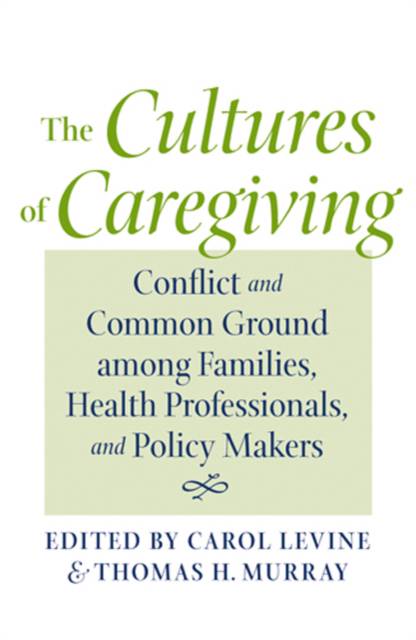
The Cultures of Caregiving
Conflict and Common Ground Among Families, Health Professionals, and Policy Makers
€ 49,95
+ 99 punten
Omschrijving
As the population ages and the health care system focuses on cost-containment, family caregivers have become the frontline providers of most long-term and chronic care. Patient care at home falls mainly on untrained and unprepared family members, who struggle to adjust to the new roles, responsibilities, and expenses. Because the culture of family caregivers-their values, priorities, and relationships to the patient-often differs markedly from that of professionals, the result can be conflict and misunderstanding. In The Cultures of Caregiving, Carol Levine and Thomas Murray bring together accomplished physicians, nurses, social workers, and policy experts to examine the differences and conflicts (and sometimes common ground) between family caregivers and health care professionals-and to suggest ways to improve the situation. Topics addressed include family caregivers and the health care system; cultural diversity and family caregiving; the changing relationship between nurses, home care aides, and families; long-term health care policy; images of family caregivers in film; and the ethical dimensions of professional and family responsibilities. The Cultures of Caregiving provides needed answers in the contemporary crisis of family caregiving for a readership of professionals and students in medical ethics, health policy, and such fields as primary care, geriatrics, oncology, nursing, and social work. Contributors: Donna Jean Appell, R.N., Project DOCC: Delivery of Chronic Care; Jeffrey Blustein, Ph.D., Albert Einstein College of Medicine and Barnard College; Judith Feder, Ph.D., Georgetown University; Gladys Gonzalaz-Ramos, M.S.W., Ph.D., New York University School of Social Work and NYU Medical School; David A. Gould, Ph.D., United Hospital Fund in New York City; Eileen Hanley, R.N., M.B.A., St. Vincent's Hospital Manhattan / Saint Vincent Catholic Medical Centers, New York City; Maggie Hoffman, Project DOCC: Delivery of Chronic Care; Alexis Kuerbis, C.S.W., Mount Sinai Medical Center; Carol Levine, M.A., United Hospital Fund, in New York City; Jerome K. Lowenstein, M.D., New York University Medical Center; Mathy Mezey, R.N., Ed.D., New York University; Thomas H. Murray, Ph.D., The Hastings Center, Garrison, New York; Judah L. Ronch, Ph.D., LifeSpan DevelopMental Systems; Sheila M. Rothman, Ph.D., Columbia University Mailman School of Public Health; Rick Surpin, Independence Care System.
Specificaties
Betrokkenen
- Uitgeverij:
Inhoud
- Aantal bladzijden:
- 216
- Taal:
- Engels
- Reeks:
Eigenschappen
- Productcode (EAN):
- 9780801887710
- Verschijningsdatum:
- 1/11/2007
- Uitvoering:
- Paperback
- Formaat:
- Trade paperback (VS)
- Afmetingen:
- 162 mm x 228 mm
- Gewicht:
- 362 g

Alleen bij Standaard Boekhandel
+ 99 punten op je klantenkaart van Standaard Boekhandel
Cadeau

AANGERADEN


Beoordelingen
We publiceren alleen reviews die voldoen aan de voorwaarden voor reviews. Bekijk onze voorwaarden voor reviews.