


- Afhalen na 1 uur in een winkel met voorraad
- Gratis thuislevering in België vanaf € 30
- Ruim aanbod met 7 miljoen producten
- Afhalen na 1 uur in een winkel met voorraad
- Gratis thuislevering in België vanaf € 30
- Ruim aanbod met 7 miljoen producten





€ 79,50
+ 159 punten
Omschrijving
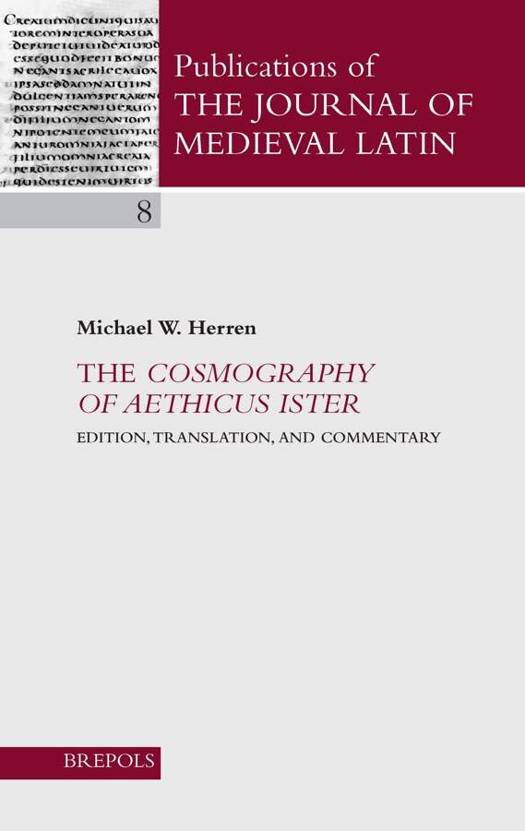
One of the most skilful forgeries of the Middle Ages, the Cosmography of Aethicus Ister has puzzled scholars for over 150 years, not least because of its challenging Latinity. Written at a western centre in the first part of the eighth century, the work purports to be a heavily censored epitome made by St. Jerome of a cosmography by an Istrian philosopher named Aethicus. This writer, who is otherwise unknown, describes a flat-earth universe resembling that of Cosmas Indicopleustes, then gives an eye-witness account of his travels to the isles of the gentiles in the North and East. There he encounters not only savage races, but also monsters, Amazons, and other figures of mythology. Alexander the Great also figures prominently by immuring the unclean races, who will escape to ravage the world at the coming of the Anti-Christ. Not all is fiction. The author's observations on volcanoes, earthquakes, and tsunamis will interest the scientific reader. The last part deals in coded fashion with contemporary events in the eastern Mediterranean and the Balkans, and may provide a clue to the author's origins. The present volume offers a new critical text, the first translation, and a detailed commentary covering every aspect of the work.
Specificaties
Betrokkenen
- Auteur(s):
- Uitgeverij:
Inhoud
- Aantal bladzijden:
- 479
- Taal:
- Engels
- Reeks:
- Reeksnummer:
- nr. 8
Eigenschappen
- Productcode (EAN):
- 9782503535777
- Verschijningsdatum:
- 19/05/2011
- Uitvoering:
- Paperback
- Formaat:
- Trade paperback (VS)
- Afmetingen:
- 163 mm x 249 mm
- Gewicht:
- 884 g


Alleen bij Standaard Boekhandel
+ 159 punten op je klantenkaart van Standaard Boekhandel
Cadeau

AANGERADEN


Beoordelingen
We publiceren alleen reviews die voldoen aan de voorwaarden voor reviews. Bekijk onze voorwaarden voor reviews.