


- Afhalen na 1 uur in een winkel met voorraad
- Gratis thuislevering in België vanaf € 30
- Ruim aanbod met 7 miljoen producten
- Afhalen na 1 uur in een winkel met voorraad
- Gratis thuislevering in België vanaf € 30
- Ruim aanbod met 7 miljoen producten





Omschrijving
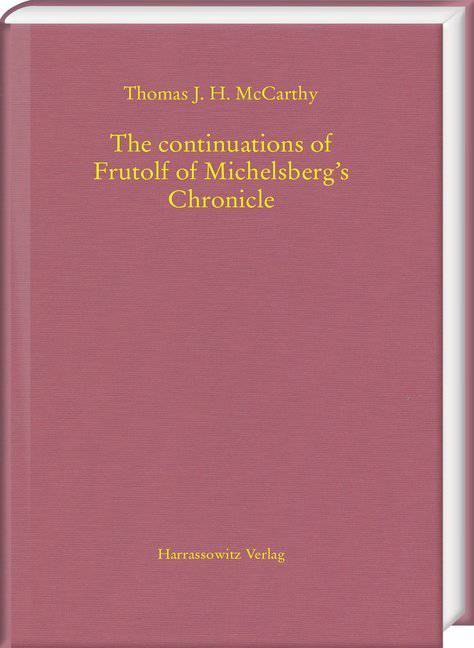
Frutolf of Michelsberg's Chronicle, completed c. 1099, is one of the most important historical works of the middle ages. Often seen as the epitome of the universal chronicle, it presents a detailed account of world history from the Creation until the end of the eleventh century. Such was its significance that it had already been continued and adapted numerous times by 1125. The author of these continuations has traditionally been seen as Abbot Ekkehard of Aura ( c. 1130), who supposedly continued Frutolf's largely pro-imperial work from his own pro-Gregorian perspective. This book is the first full-length study of the early twelfth-century continuations of Frutolf's Chronicle. Through detailed textual, palaeographical and historiographical study, McCarthy shows that the attribution of the continuations to Ekkehard is largely false, concluding that only one of the surviving continuations can reasonably be ascribed to him. These conclusions drastically alter the accepted view of Ekkehard, which was based on the assumption that the eye-witness reports of the continuations were his. Rather, is much less known about him than previously believed: Ekkehard did not continue the autograph manuscript of Frutolf's Chronicle, was not a crusader and cannot be seen as an associate of the young Henry V. In place of the misleading Ekkehard narrative, McCarthy uncovers fascinating evidence of repeated interaction with Frutolf's Chronicle in early twelfth-century Bamberg. His book thus paints a vivid picture of the practice of historical writing and offers a salutary reminder of how central the work of medieval scribes is to our historical epistemology.
Specificaties
Betrokkenen
- Auteur(s):
- Uitgeverij:
Inhoud
- Aantal bladzijden:
- 258
- Taal:
- Engels
- Reeks:
- Reeksnummer:
- nr. 74
Eigenschappen
- Productcode (EAN):
- 9783447110617
- Verschijningsdatum:
- 29/08/2018
- Uitvoering:
- Hardcover
- Formaat:
- Genaaid
- Afmetingen:
- 156 mm x 235 mm
- Gewicht:
- 511 g


Alleen bij Standaard Boekhandel
+ 251 punten op je klantenkaart van Standaard Boekhandel
Wedstrijd


Beoordelingen
We publiceren alleen reviews die voldoen aan de voorwaarden voor reviews. Bekijk onze voorwaarden voor reviews.