


- Afhalen na 1 uur in een winkel met voorraad
- Gratis thuislevering in België vanaf € 30
- Ruim aanbod met 7 miljoen producten
- Afhalen na 1 uur in een winkel met voorraad
- Gratis thuislevering in België vanaf € 30
- Ruim aanbod met 7 miljoen producten





€ 23,95
+ 47 punten
Omschrijving
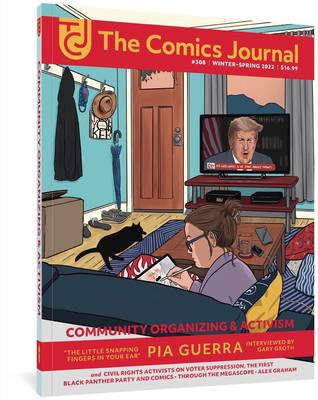
In this issue, Gary Groth conducts a career-spanning interview with Y: The Last Man comics artist Pia Guerra about her turn to editorial cartooning and future projects. John Jennings explores the vision behind the graphic imprint Megascope, devoted to "rediscovering powerful speculative work by and about people of color." Jennie S. Law interviews Civil Rights activists Jennifer Lawson and Courtland Cox about their ingenious strategies -- comics pamphlets about gaining political power, going undercover, mass meetings -- to register voters in Lowndes County circa 1965. Nicknamed "Bloody Lowndes," 80% of its population was Black, yet only two Black people were registered to vote. Also: a gallery of Frank Leet's one-panel cartoons illustrating Don Marquis's (Archy and Mehitabel) verse, a conversation with Alex Graham about self-publishing a 400-page graphic novel, a Rob Guillory (Chew, Farmhand) sketchbook, an original comic by Meg O'Shea, and more.
Specificaties
Betrokkenen
- Auteur(s):
- Uitgeverij:
Inhoud
- Aantal bladzijden:
- 180
- Taal:
- Engels
- Reeks:
Eigenschappen
- Productcode (EAN):
- 9781683965336
- Verschijningsdatum:
- 24/05/2022
- Uitvoering:
- Paperback
- Formaat:
- Trade paperback (VS)
- Afmetingen:
- 190 mm x 239 mm
- Gewicht:
- 385 g


Alleen bij Standaard Boekhandel
+ 47 punten op je klantenkaart van Standaard Boekhandel
CADEAU

AANGERADEN


Beoordelingen
We publiceren alleen reviews die voldoen aan de voorwaarden voor reviews. Bekijk onze voorwaarden voor reviews.