



Je cadeautjes zeker op tijd in huis hebben voor de feestdagen? Kom langs in onze winkels en vind het perfecte geschenk!
- Afhalen na 1 uur in een winkel met voorraad
- Gratis thuislevering in België vanaf € 30
- Ruim aanbod met 7 miljoen producten
Je cadeautjes zeker op tijd in huis hebben voor de feestdagen? Kom langs in onze winkels en vind het perfecte geschenk!
- Afhalen na 1 uur in een winkel met voorraad
- Gratis thuislevering in België vanaf € 30
- Ruim aanbod met 7 miljoen producten





Omschrijving
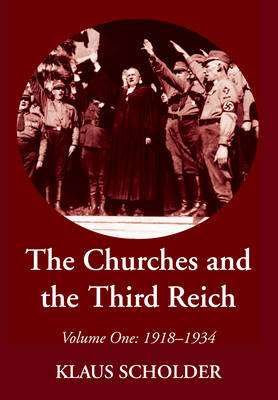
This monumental, comprehensive, controversial study is the first volume of a definitive history of the churches in Germany between the wars. It is especially significant in that it is based on a great deal of original research into both religious and political sources, and is the first book to work on the presupposition that an accurate picture of the churches in the Third Reich demands that both Protestant and Roman Catholic churches are studied side by side, since it was the rivalry between the churches that in some ways contributed to their downfall. Contrary to what has often been asserted, Professor Scholder argues that Hitler did have a plan for the churches over a long period. Crucial to that plan on the Catholic side was his desire for a concordat parallel to that achieved by Mussolini, keeping the clergy out of politics, which the Vatican was over-hasty to meet; it was the attempt to treat the Protestant churches in a similar way to the Catholic church, which led to the difficulties that ended in the church struggle. There is also a realistic analysis of the Jewish question, documenting the churches' failure in this area with severity and scholarly rigor. The first part covers developments up to Hitler's seizure of power; the second is devoted to the year 1933, during which all the major issues were in fact decided.
Specificaties
Betrokkenen
- Auteur(s):
- Uitgeverij:
Inhoud
- Aantal bladzijden:
- 768
- Taal:
- Engels
Eigenschappen
- Productcode (EAN):
- 9781532643224
- Verschijningsdatum:
- 4/05/2018
- Uitvoering:
- Paperback
- Formaat:
- Trade paperback (VS)
- Afmetingen:
- 178 mm x 254 mm
- Gewicht:
- 1356 g


Alleen bij Standaard Boekhandel
+ 241 punten op je klantenkaart van Standaard Boekhandel
CADEAU


Beoordelingen
We publiceren alleen reviews die voldoen aan de voorwaarden voor reviews. Bekijk onze voorwaarden voor reviews.