


- Afhalen na 1 uur in een winkel met voorraad
- Gratis thuislevering in België vanaf € 30
- Ruim aanbod met 7 miljoen producten
- Afhalen na 1 uur in een winkel met voorraad
- Gratis thuislevering in België vanaf € 30
- Ruim aanbod met 7 miljoen producten





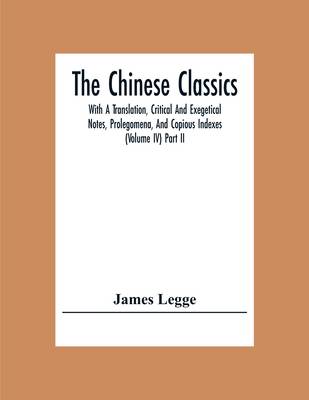
The Chinese Classics
With A Translation, Critical And Exegetical Notes, Prolegomena, And Copious Indexes (Volume Iv) Part Ii
James Legge
Paperback | Engels
€ 94,45
+ 188 punten
Uitvoering
Omschrijving
A foundational bridge to imperial Chinese thought. Read it with quiet attention. James Legge's The Chinese Classics (Volume IV, Part II) exemplifies scholarly precision and readable translation. This 19th century translation renders Chinese philosophy texts into clear, dignified English and pairs each rendering with critical and exegetical notes, prolegomena and copious indexes; the result is an exegetical commentary that opens difficult phrasing and variant readings without flattening nuance. The collection reads as a classical literature anthology and as a Confucian classics collection that preserves strands of ancient Chinese wisdom, while its apparatus makes it useful both to casual readers and to those engaged in rigorous study. Serving scholars and students as an academic reference book, the volume gathers historical Chinese texts with the methodical care of a philologist. Legge's prolegomena offer clear historical orientation and bibliographical guidance, while the notes cross-reference classical commentaries and variant readings to support rigorous exegesis. The copious indexes invite precise research and unexpected discovery, turning a demanding set of historical Chinese texts into a navigable scholarly resource. Translators, historians and heterodox readers alike find the balance of literal fidelity and explanatory paraphrase helpful; the prose honours the original cadence without becoming archaic in English. For those assembling courses, private libraries or a thematic classical literature anthology, this volume is both foundational and refreshingly direct. In private study or taught courses, this precise translation and its notes make sustained, comparative reading straightforward and deeply rewarding. Over a century later its influence endures in imperial China studies and in Confucian analects study, and collectors who follow James Legge's works recognise the calm authority of these pages. Republished by Alpha Editions in a careful modern edition, this volume preserves the spirit of the original while making it effortless to enjoy today - a heritage title prepared for readers and collectors alike.
Specificaties
Betrokkenen
- Auteur(s):
- Uitgeverij:
Inhoud
- Aantal bladzijden:
- 592
- Taal:
- Engels
Eigenschappen
- Productcode (EAN):
- 9789354308444
- Verschijningsdatum:
- 15/12/2020
- Uitvoering:
- Paperback
- Formaat:
- Trade paperback (VS)
- Afmetingen:
- 216 mm x 279 mm
- Gewicht:
- 1351 g


Alleen bij Standaard Boekhandel
+ 188 punten op je klantenkaart van Standaard Boekhandel
CADEAU

AANGERADEN


Beoordelingen
We publiceren alleen reviews die voldoen aan de voorwaarden voor reviews. Bekijk onze voorwaarden voor reviews.