


- Afhalen na 1 uur in een winkel met voorraad
- Gratis thuislevering in België vanaf € 30
- Ruim aanbod met 7 miljoen producten
- Afhalen na 1 uur in een winkel met voorraad
- Gratis thuislevering in België vanaf € 30
- Ruim aanbod met 7 miljoen producten





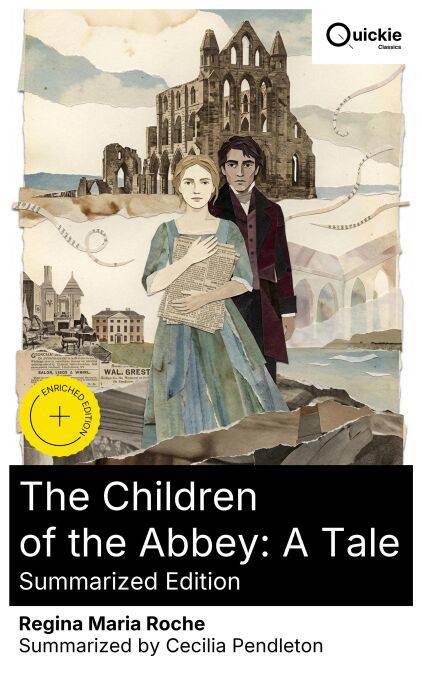
The Children of the Abbey: A Tale (Summarized Edition) E-BOOK
Enriched edition. A suspenseful 18th-century Gothic romance of betrayal and love amid societal expectations
Regina Maria Roche
E-book | Engels
€ 1,99
+ 1 punten
Omschrijving
The Children of the Abbey follows orphaned siblings wronged of their estate, especially Amanda, whose virtue endures pursuit, forged papers, and perilous hospitality. Moving from Irish demesnes to English salons, convents, and ruins, the tale marries sentimental romance to Gothic incident, inset letters, and moral exempla. Its episodic revelations place it between Radcliffean suspense and the domestic novel, probing entail, guardianship, and the reputation economy of the 1790s. Regina Maria Roche, an Irish mainstay of the Minerva Press, wrote for circulating-library readers who prized suspense tempered by sensibility. Her knowledge of Anglo-Irish estates, urban sociability, and precarious patronage shapes the novel's settings and stakes; like Radcliffe and Burney, she turns professional savvy into scenes where rumor, print, and legal process decisively script a heroine's fate. Recommended to readers of Romantic-era fiction and Gothic romance, this capacious tale offers ruined abbeys, convent interludes, inheritance intrigues, and a steady moral compass. Ideal for courses on women's writing or legal and print cultures, it rewards patient reading with elegant turns, clear social observation, and a restorative conclusion.
Quickie Classics summarizes timeless works with precision, preserving the author's voice and keeping the prose clear, fast, and readable—distilled, never diluted. Enriched Edition extras: Introduction · Synopsis · Historical Context · Brief Analysis · 4 Reflection Q&As · Editorial Footnotes.
Quickie Classics summarizes timeless works with precision, preserving the author's voice and keeping the prose clear, fast, and readable—distilled, never diluted. Enriched Edition extras: Introduction · Synopsis · Historical Context · Brief Analysis · 4 Reflection Q&As · Editorial Footnotes.
Specificaties
Betrokkenen
- Auteur(s):
- Uitgeverij:
Inhoud
- Aantal bladzijden:
- 215
- Taal:
- Engels
Eigenschappen
- Productcode (EAN):
- 8596547883937
- Verschijningsdatum:
- 9/01/2026
- Uitvoering:
- E-book
- Beveiligd met:
- Digital watermarking
- Formaat:
- ePub


Alleen bij Standaard Boekhandel
+ 1 punten op je klantenkaart van Standaard Boekhandel
CADEAU

AANGERADEN


Beoordelingen
We publiceren alleen reviews die voldoen aan de voorwaarden voor reviews. Bekijk onze voorwaarden voor reviews.