


- Afhalen na 1 uur in een winkel met voorraad
- Gratis thuislevering in België vanaf € 30
- Ruim aanbod met 7 miljoen producten
- Afhalen na 1 uur in een winkel met voorraad
- Gratis thuislevering in België vanaf € 30
- Ruim aanbod met 7 miljoen producten





€ 141,95
+ 283 punten
Omschrijving
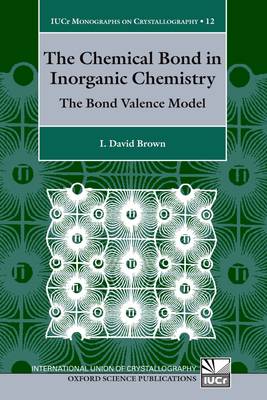
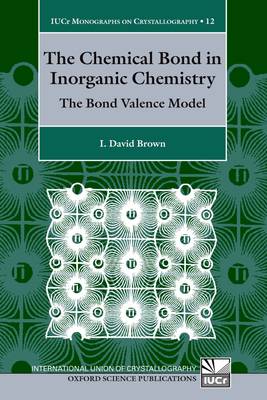
This book describes the bond valence model, a description of acid-base bonding which is becoming increasingly popular particularly in fields such as materials science and mineralogy where solid state inorganic chemistry is important. Recent improvements in crystal structure determination have allowed the model to become more quantitative. Unlike other models of inorganic chemical bonding, the bond valence model is simple, intuitive, and predictive, and can be used for analysing crystal structures and the conceptual modelling of local as well as extended structures. This is the first book to explore the theoretical basis of the model and to show how it can be applied to synthetic and solution chemistry. It emphasizes the separate roles of the constraints of chemistry and of three-dimensional space by analysing the chemistry of solids. Many applications of the model in physics, materials science, chemistry, mineralogy, soil science, surface science, and molecular biology are reviewed. The final chapter describes how the bond valence model relates to and represents a simplification of other models of inorganic chemical bonding.
Specificaties
Betrokkenen
- Auteur(s):
- Uitgeverij:
Inhoud
- Aantal bladzijden:
- 292
- Taal:
- Engels
- Reeks:
- Reeksnummer:
- nr. 12
Eigenschappen
- Productcode (EAN):
- 9780199298815
- Verschijningsdatum:
- 13/07/2006
- Uitvoering:
- Paperback
- Formaat:
- Trade paperback (VS)
- Afmetingen:
- 160 mm x 234 mm
- Gewicht:
- 449 g


Alleen bij Standaard Boekhandel
+ 283 punten op je klantenkaart van Standaard Boekhandel
CADEAU

AANGERADEN


Beoordelingen
We publiceren alleen reviews die voldoen aan de voorwaarden voor reviews. Bekijk onze voorwaarden voor reviews.