


- Afhalen na 1 uur in een winkel met voorraad
- Gratis thuislevering in België vanaf € 30
- Ruim aanbod met 7 miljoen producten
- Afhalen na 1 uur in een winkel met voorraad
- Gratis thuislevering in België vanaf € 30
- Ruim aanbod met 7 miljoen producten




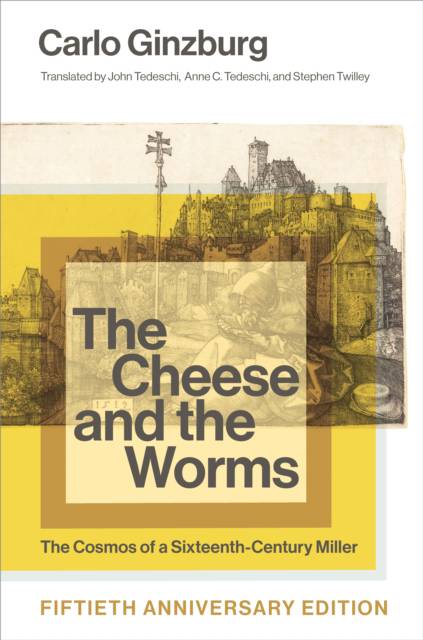
The Cheese and the Worms, Fiftieth Anniversary Edition
The Cosmos of a Sixteenth-Century Miller
Carlo Ginzburg
Paperback | Engels
€ 42,45
+ 84 punten
Omschrijving
The Cheese and the Worms is an incisive study of popular culture in the sixteenth century as seen through the eyes of one man, the miller known as Menocchio, who was accused of heresy during the Inquisition and sentenced to death. In the fiftieth anniversary edition of this now-classic book, Carlo Ginzburg uses the trial records to illustrate the religious and social conflicts of the society Menocchio lived in. For a common miller, Menocchio was surprisingly literate. In his trial testimony, he made references to more than a dozen books, including the Bible, Boccaccio's Decameron, Mandeville's Travels, and a "mysterious" book that may have been the Koran. And what he read he recast in terms familiar to him, as in his own version of the creation: "All was chaos, that is earth, air, water, and fire were mixed together; and of that bulk a mass formed-just as cheese is made out of milk-and worms appeared in it, and these were the angels." Ginzburg's massively influential book has been widely regarded as an early example of the analytic, case-oriented approach known as microhistory. In the preface, Ginzburg offers his own corollary to Menocchio's story as he considers the discrepancy between the intentions of the writer and what gets written. The Italian miller's story and Ginzburg's work continue to resonate with modern readers because they focus on how oral and written culture are inextricably linked. Menocchio's 500-year-old challenge to authority remains evocative and vital today.
Specificaties
Betrokkenen
- Auteur(s):
- Vertaler(s):
- Uitgeverij:
Inhoud
- Aantal bladzijden:
- 224
- Taal:
- Engels
Eigenschappen
- Productcode (EAN):
- 9781421454634
- Verschijningsdatum:
- 31/03/2026
- Uitvoering:
- Paperback
- Formaat:
- Trade paperback (VS)
- Afmetingen:
- 157 mm x 234 mm
- Gewicht:
- 349 g



Alleen bij Standaard Boekhandel
+ 84 punten op je klantenkaart van Standaard Boekhandel
CADEAU

AANGERADEN


Beoordelingen
We publiceren alleen reviews die voldoen aan de voorwaarden voor reviews. Bekijk onze voorwaarden voor reviews.