


- Afhalen na 1 uur in een winkel met voorraad
- Gratis thuislevering in België vanaf € 30
- Ruim aanbod met 7 miljoen producten
- Afhalen na 1 uur in een winkel met voorraad
- Gratis thuislevering in België vanaf € 30
- Ruim aanbod met 7 miljoen producten




€ 118,45
+ 236 punten
Omschrijving
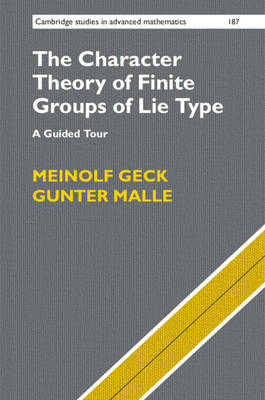
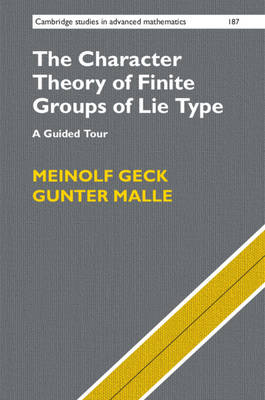
Through the fundamental work of Deligne and Lusztig in the 1970s, further developed mainly by Lusztig, the character theory of reductive groups over finite fields has grown into a rich and vast area of mathematics. It incorporates tools and methods from algebraic geometry, topology, combinatorics and computer algebra, and has since evolved substantially. With this book, the authors meet the need for a contemporary treatment, complementing in core areas the well-established books of Carter and Digne-Michel. Focusing on applications in finite group theory, the authors gather previously scattered results and allow the reader to get to grips with the large body of literature available on the subject, covering topics such as regular embeddings, the Jordan decomposition of characters, d-Harish-Chandra theory and Lusztig induction for unipotent characters. Requiring only a modest background in algebraic geometry, this useful reference is suitable for beginning graduate students as well as researchers.
Specificaties
Betrokkenen
- Auteur(s):
- Uitgeverij:
Inhoud
- Aantal bladzijden:
- 404
- Taal:
- Engels
- Reeks:
- Reeksnummer:
- nr. 187
Eigenschappen
- Productcode (EAN):
- 9781108489621
- Verschijningsdatum:
- 9/04/2020
- Uitvoering:
- Hardcover
- Formaat:
- Genaaid
- Afmetingen:
- 163 mm x 231 mm
- Gewicht:
- 635 g


Alleen bij Standaard Boekhandel
+ 236 punten op je klantenkaart van Standaard Boekhandel
AANGERADEN


Beoordelingen
We publiceren alleen reviews die voldoen aan de voorwaarden voor reviews. Bekijk onze voorwaarden voor reviews.