


- Afhalen na 1 uur in een winkel met voorraad
- Gratis thuislevering in België vanaf € 30
- Ruim aanbod met 7 miljoen producten
- Afhalen na 1 uur in een winkel met voorraad
- Gratis thuislevering in België vanaf € 30
- Ruim aanbod met 7 miljoen producten





€ 47,45
+ 94 punten
Omschrijving
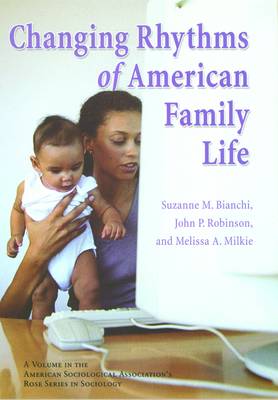
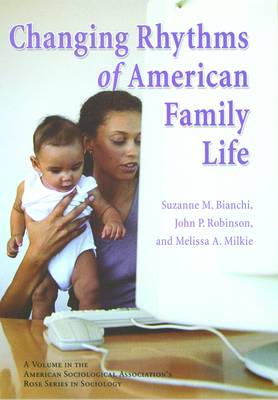
Over the last forty years, the number of American households with a stay-at-home parent has dwindled as women have increasingly joined the paid workforce and more women raise children alone. Many policy makers feared these changes would come at the expense of time mothers spend with their children. In Changing Rhythms of American Family Life, sociologists Suzanne M. Bianchi, John P. Robinson, and Melissa Milkie analyze the way families spend their time and uncover surprising new findings about how Americans are balancing the demands of work and family. Using time diary data from surveys of American parents over the last four decades, Changing Rhythms of American Family Life finds that--despite increased workloads outside of the home--mothers today spend at least as much time interacting with their children as mothers did decades ago--and perhaps even more. Unexpectedly, the authors find mothers' time at work has not resulted in an overall decline in sleep or leisure time. Rather, mothers have made time for both work and family by sacrificing time spent doing housework and by increased "multitasking." Changing Rhythms of American Family Life finds that the total workload (in and out of the home) for employed parents is high for both sexes, with employed mothers averaging five hours more per week than employed fathers and almost nineteen hours more per week than homemaker mothers. Comparing average workloads of fathers with all mothers--both those in the paid workforce and homemakers--the authors find that there is gender equality in total workloads, as there has been since 1965. Overall, it appears that Americans have adapted to changing circumstances to ensure that they preserve their family time and provide adequately for their children. Changing Rhythms of American Family Life explodes many of the popular misconceptions about how Americans balance work and family. Though the iconic image of the American mother has changed from a docile homemaker to a frenzied, sleepless working mom, this important new volume demonstrates that the time mothers spend with their families has remained steady throughout the decades.
Specificaties
Betrokkenen
- Auteur(s):
- Uitgeverij:
Inhoud
- Aantal bladzijden:
- 267
- Taal:
- Engels
- Reeks:
Eigenschappen
- Productcode (EAN):
- 9780871540935
- Verschijningsdatum:
- 12/10/2007
- Uitvoering:
- Paperback
- Formaat:
- Trade paperback (VS)
- Afmetingen:
- 153 mm x 226 mm
- Gewicht:
- 408 g


Alleen bij Standaard Boekhandel
+ 94 punten op je klantenkaart van Standaard Boekhandel
Cadeau

AANGERADEN


Beoordelingen
We publiceren alleen reviews die voldoen aan de voorwaarden voor reviews. Bekijk onze voorwaarden voor reviews.