


- Afhalen na 1 uur in een winkel met voorraad
- Gratis thuislevering in België vanaf € 30
- Ruim aanbod met 7 miljoen producten
- Afhalen na 1 uur in een winkel met voorraad
- Gratis thuislevering in België vanaf € 30
- Ruim aanbod met 7 miljoen producten





€ 216,45
+ 432 punten
Uitvoering
Omschrijving
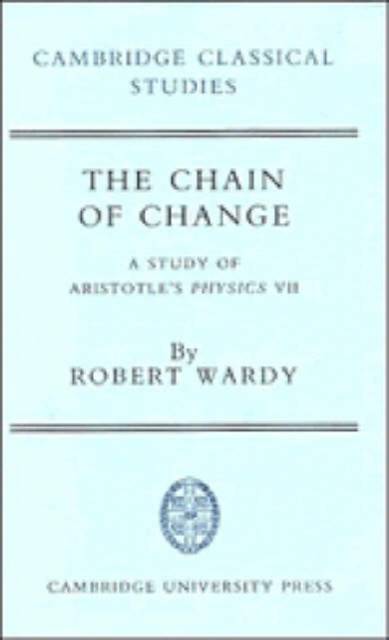
The Chain of Change is the first full-scale philosophical commentary devoted to Aristotle's Physics VII, in which Aristotle argues for the existence of a first, unmoved cosmic mover. This study systematically considers the major issues of the book, and argues for the fundamental importance of Physics VII in our understanding of Aristotelian cosmology and natural science. Physics VII is extant in two versions, and therefore poses special editorial problems. For this reason one of the features of Dr. Wardy's study is the provision of an improved text and translation in both versions. The author's comprehensive comparison of their merits, philosophical and philological, has a significant bearing on our understanding of the nature and evolution of the Aristotelian corpus. The second part of the book is devoted to critical examination of the argument, including one of the most elaborate and challenging in the entire Aristotelian corpus. Throughout, the author concentrates on those points where Aristotle diverges most sharply and provocatively from contemporary presumptions in philosophy and natural science.
Specificaties
Betrokkenen
- Auteur(s):
- Uitgeverij:
Inhoud
- Aantal bladzijden:
- 356
- Taal:
- Engels
- Reeks:
Eigenschappen
- Productcode (EAN):
- 9780521373272
- Verschijningsdatum:
- 27/09/1990
- Uitvoering:
- Hardcover
- Formaat:
- Genaaid
- Afmetingen:
- 140 mm x 216 mm
- Gewicht:
- 598 g


Alleen bij Standaard Boekhandel
+ 432 punten op je klantenkaart van Standaard Boekhandel
Cadeau

AANGERADEN


Beoordelingen
We publiceren alleen reviews die voldoen aan de voorwaarden voor reviews. Bekijk onze voorwaarden voor reviews.