


- Afhalen na 1 uur in een winkel met voorraad
- Gratis thuislevering in België vanaf € 30
- Ruim aanbod met 7 miljoen producten
- Afhalen na 1 uur in een winkel met voorraad
- Gratis thuislevering in België vanaf € 30
- Ruim aanbod met 7 miljoen producten





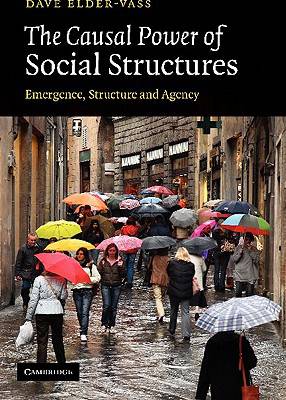
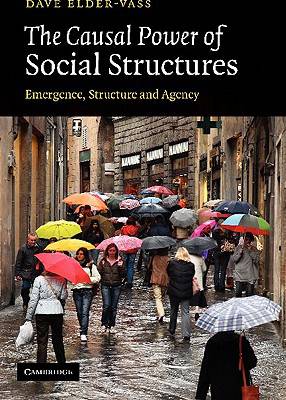
The Causal Power of Social Structures
Emergence, Structure and Agency
Dave Elder-Vass
Paperback | Engels
€ 80,95
+ 161 punten
Uitvoering
Omschrijving
The problem of structure and agency has been the subject of intense debate in the social sciences for over a hundred years. This book offers a new solution. Using a critical realist version of the theory of emergence, Dave Elder-Vass argues that instead of ascribing causal significance to an abstract notion of social structure or a monolithic concept of society, we must recognise that it is specific groups of people that have social structural power. Some of these groups are entities with emergent causal powers, distinct from those of human individuals. Yet these powers also depend on the contributions of human individuals, and this book examines the mechanisms through which interactions between human individuals generate the causal powers of some types of social structures. The Causal Power of Social Structures makes particularly important contributions to the theory of human agency and to our understanding of normative institutions.
Specificaties
Betrokkenen
- Auteur(s):
- Uitgeverij:
Inhoud
- Aantal bladzijden:
- 234
- Taal:
- Engels
Eigenschappen
- Productcode (EAN):
- 9781107402973
- Verschijningsdatum:
- 11/08/2011
- Uitvoering:
- Paperback
- Formaat:
- Trade paperback (VS)
- Afmetingen:
- 152 mm x 229 mm
- Gewicht:
- 349 g


Alleen bij Standaard Boekhandel
+ 161 punten op je klantenkaart van Standaard Boekhandel
Cadeau

AANGERADEN


Beoordelingen
We publiceren alleen reviews die voldoen aan de voorwaarden voor reviews. Bekijk onze voorwaarden voor reviews.