


- Afhalen na 1 uur in een winkel met voorraad
- Gratis thuislevering in België vanaf € 30
- Ruim aanbod met 7 miljoen producten
- Afhalen na 1 uur in een winkel met voorraad
- Gratis thuislevering in België vanaf € 30
- Ruim aanbod met 7 miljoen producten





Omschrijving
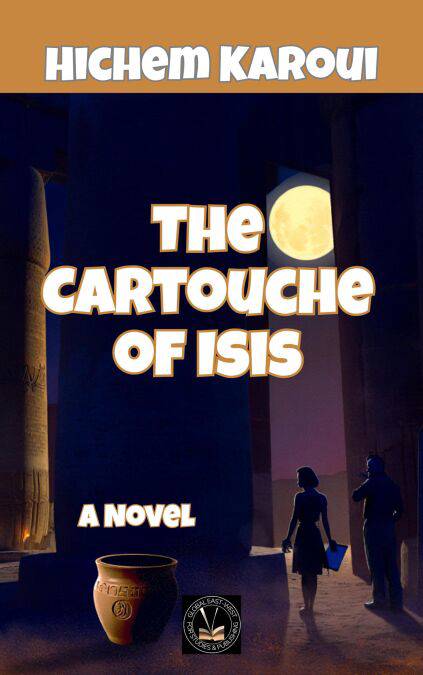
Dr. Leila Marsh has built her reputation on bringing the past into the light. As lead archaeologist on a New Kingdom site across from Luxor, she lives for controlled grids, clean stratigraphy, and peer‑reviewed certainty.
Then a sealed wall gives way to something that doesn't fit any of her categories.
Hidden behind the official chambers of a desert temple lies a small inner room, carved with unsettling precision and sealed with the cartouche of Isis. Within it: a clay vessel, unopened for three millennia, containing an impossible archive—a first‑person record from a priestess and a temple scribe whose love should never have been written down at all.
As Leila translates their confessions, she finds her own life entangled with Tariq al‑Rashid, a local guide whose family has quietly guarded the site for generations. To Tariq, the chamber is not a "find"; it's a trust. To the ministry, it's a media coup. To a corrupt official, it's an asset to be exploited.
When the discovery leaks to the international press and unauthorised photographs of the papyri begin circulating, Leila must decide whether her duty is to the global archive—or to the people, living and dead, who have the most at stake in what is revealed.
The Cartouche of Isis combines the tension of an archaeological thriller with the intimacy of a character‑driven love story. Moving between the ritual shadows of ancient Egypt and the chaotic politics of modern heritage management, it asks:
Who owns a story that was never meant for us? When does "sharing" history become a new form of theft? And what happens to the excavator when the thing uncovered is her own life?Specificaties
Betrokkenen
- Auteur(s):
- Uitgeverij:
Inhoud
- Taal:
- Engels
Eigenschappen
- Productcode (EAN):
- 9798232503239
- Verschijningsdatum:
- 9/03/2026
- Uitvoering:
- E-book
- Beveiligd met:
- Adobe DRM
- Formaat:
- ePub


Alleen bij Standaard Boekhandel
+ 24 punten op je klantenkaart van Standaard Boekhandel
Cadeau

AANGERADEN


Beoordelingen
We publiceren alleen reviews die voldoen aan de voorwaarden voor reviews. Bekijk onze voorwaarden voor reviews.