


- Afhalen na 1 uur in een winkel met voorraad
- Gratis thuislevering in België vanaf € 30
- Ruim aanbod met 7 miljoen producten
- Afhalen na 1 uur in een winkel met voorraad
- Gratis thuislevering in België vanaf € 30
- Ruim aanbod met 7 miljoen producten





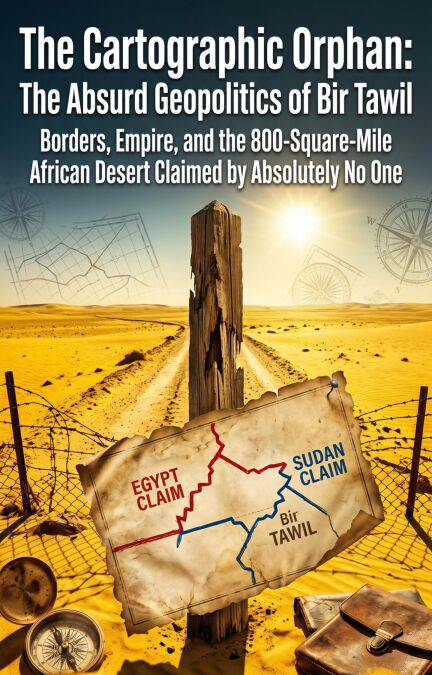
The Cartographic Orphan: The Absurd Geopolitics of Bir Tawil E-BOOK
Borders, Empire, and the 800-Square-Mile African Desert Claimed by Absolutely No One
Aaron Jackson
E-book | Engels
€ 4,99
+ 4 punten
Omschrijving
How is it legally and geographically possible that an 800-square-mile wedge of land sitting right between Egypt and Sudan is claimed by absolutely no sovereign nation on Earth? The bizarre anomaly of Bir Tawil is the last true "terra nullius" outside of Antarctica, born from the absurd arrogance of British colonial mapmaking.
In 1899, the British Empire drew a straight, geometric border between Egypt and Sudan. However, in 1902, they drew a second, jagged administrative border based on tribal grazing lands. This created two overlapping territories: the resource-rich Hala'ib Triangle and the barren Bir Tawil. Because international law dictates that a country can only claim one of the two borders, both Egypt and Sudan fiercely claim the valuable Hala'ib Triangle, thereby legally forcing themselves to completely disown Bir Tawil. Accepting the barren desert would mean legally surrendering the valuable coast.
This fascinating geopolitical exploration deconstructs the rigid inflexibility of modern borders. It explores the hilarious attempts by eccentric tourists to plant flags and claim Bir Tawil as their own micro-kingdom, and the legal paradox of a land that officially does not exist.
Question the lines on the map. Bir Tawil proves that the rigid architecture of international law can sometimes create a piece of the world that the world itself refuses to acknowledge.
In 1899, the British Empire drew a straight, geometric border between Egypt and Sudan. However, in 1902, they drew a second, jagged administrative border based on tribal grazing lands. This created two overlapping territories: the resource-rich Hala'ib Triangle and the barren Bir Tawil. Because international law dictates that a country can only claim one of the two borders, both Egypt and Sudan fiercely claim the valuable Hala'ib Triangle, thereby legally forcing themselves to completely disown Bir Tawil. Accepting the barren desert would mean legally surrendering the valuable coast.
This fascinating geopolitical exploration deconstructs the rigid inflexibility of modern borders. It explores the hilarious attempts by eccentric tourists to plant flags and claim Bir Tawil as their own micro-kingdom, and the legal paradox of a land that officially does not exist.
Question the lines on the map. Bir Tawil proves that the rigid architecture of international law can sometimes create a piece of the world that the world itself refuses to acknowledge.
Specificaties
Betrokkenen
- Auteur(s):
- Uitgeverij:
Inhoud
- Aantal bladzijden:
- 186
- Taal:
- Engels
Eigenschappen
- Productcode (EAN):
- 9783565466542
- Verschijningsdatum:
- 28/05/2026
- Uitvoering:
- E-book
- Formaat:
- ePub


Alleen bij Standaard Boekhandel
+ 4 punten op je klantenkaart van Standaard Boekhandel
CADEAU

AANGERADEN


Beoordelingen
We publiceren alleen reviews die voldoen aan de voorwaarden voor reviews. Bekijk onze voorwaarden voor reviews.