


- Afhalen na 1 uur in een winkel met voorraad
- Gratis thuislevering in België vanaf € 30
- Ruim aanbod met 7 miljoen producten
- Afhalen na 1 uur in een winkel met voorraad
- Gratis thuislevering in België vanaf € 30
- Ruim aanbod met 7 miljoen producten





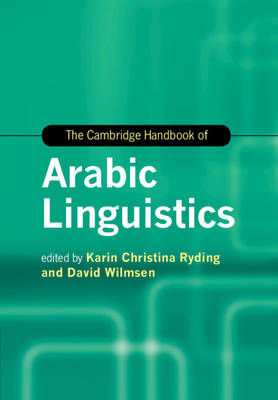
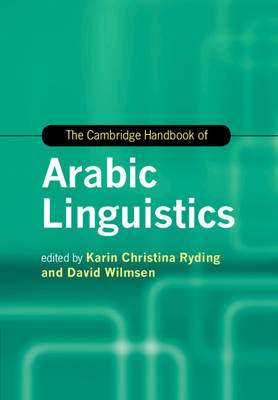
The Cambridge Handbook of Arabic Linguistics
€ 79,45
Omschrijving
Arabic linguistics encompasses a range of language forms and functions from formal to informal, classical to contemporary, written to spoken, all of which have vastly different research traditions. Recently however, the increasing prominence of new methodologies such as corpus linguistics and sociolinguistics have allowed Arabic linguistics to be studied from multiple perspectives, revealing key discoveries about the nature of Arabic-in-use and deeper knowledge of traditional fields of study. With contributions from internationally renowned experts on the language, this handbook provides a state-of-the-art overview of both traditional and modern topics in Arabic linguistics. Chapters are divided into six thematic areas: applied Arabic linguistics, variation and sociolinguistics, theoretical studies, computational and corpus linguistics, new media studies and Arabic linguistics in literature and translation. It is an essential resource for students and researchers wishing to explore the exciting and rapidly moving field of Arabic linguistics.
Specificaties
Betrokkenen
- Uitgeverij:
Inhoud
- Aantal bladzijden:
- 642
- Taal:
- Engels
- Reeks:
Eigenschappen
- Productcode (EAN):
- 9781108404891
- Verschijningsdatum:
- 17/04/2025
- Uitvoering:
- Paperback
- Formaat:
- Trade paperback (VS)
- Afmetingen:
- 170 mm x 244 mm
- Gewicht:
- 1002 g

Alleen bij Standaard Boekhandel
Cadeau

AANGERADEN


Beoordelingen
We publiceren alleen reviews die voldoen aan de voorwaarden voor reviews. Bekijk onze voorwaarden voor reviews.